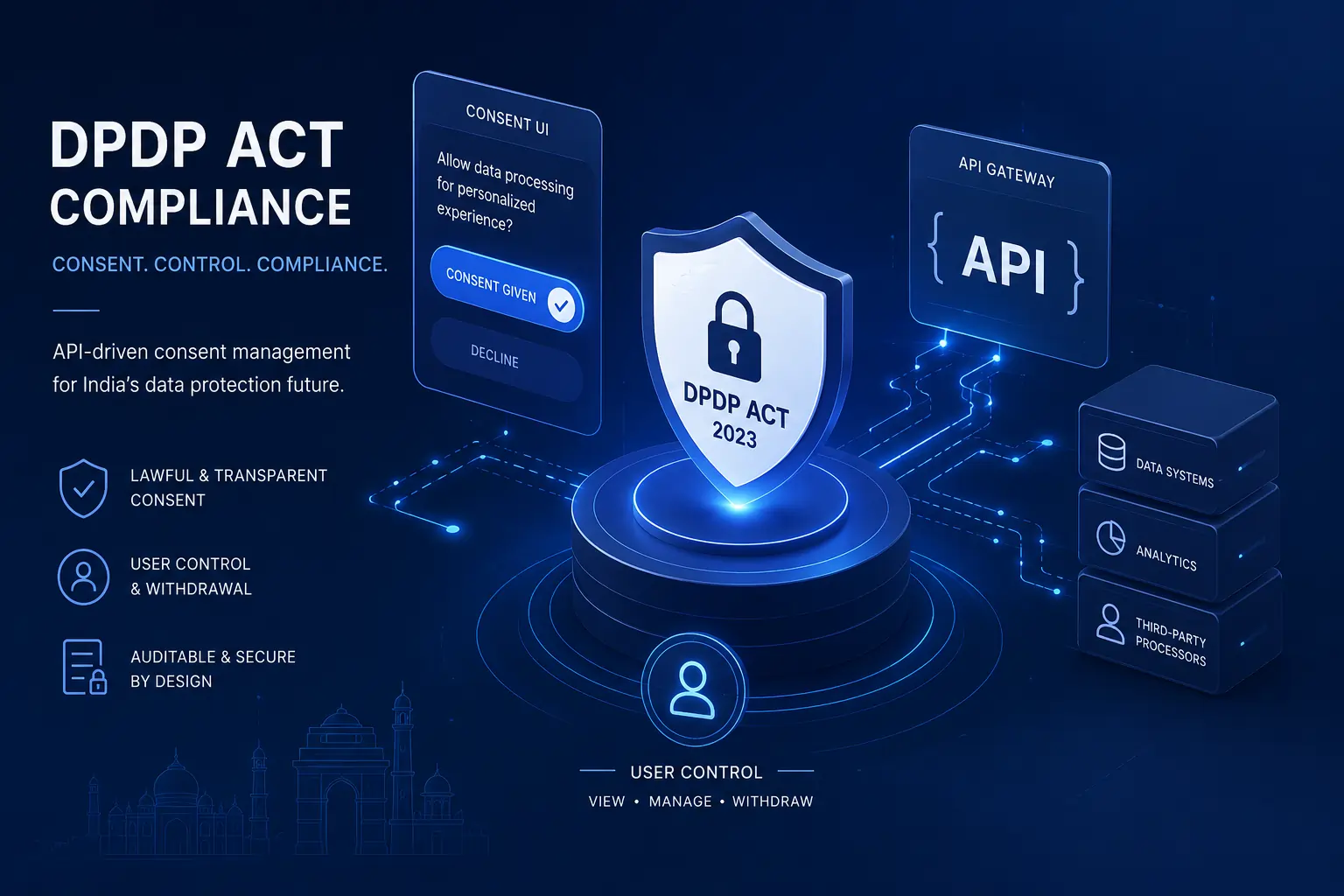
DPDP Act Consent Management: APIs, Consent Managers, and What Indian Businesses Must Actually Build
Read More
Source Code Protection for Startups Why Even “Non-Unique” Business Ideas Need Strong IP Clauses
By the SolvLegal Team
Published on: Nov. 20, 2025, 11:56 a.m.
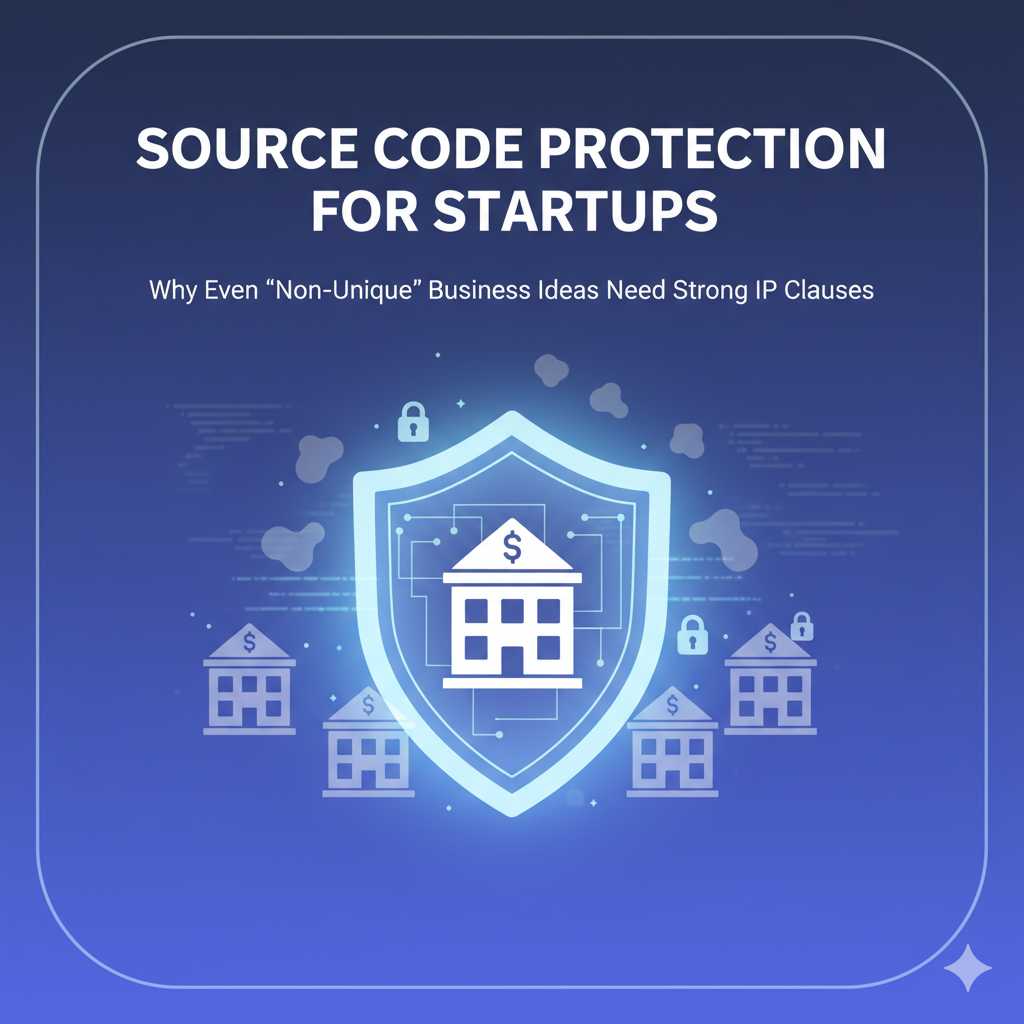
Understanding the Strategic Importance of Source Code Protection in Startup Ecosystems
In today’s environment, uniqueness is no longer the main factor that determines a business’s success in the modern world. What matters is the quality of the product or service, and for modern startups. This quality is closely linked to the source code that underpins their software and operational systems. Source code refers to the human-readable instructions written by programmers in language such as C++ or Java. It serves as a basis for software development and the operation of computer systems and applications. Legally, source code is recognized under section 2(ffc) of The Copyright Act, 1957, within the definition of “computer programme” and as category of “literary works” under article 2 of the Berne Convention in article 4 of the WIPO Copyright Treaty and as also highlighted by ruling of Google LLC v. Oracle America Inc. However, startups frequently undervalue the significance of intellectual property (IP) including patents, trademarks and other copyrights, in addition to source code. According to a Polish Study, entrepreneurs frequently struggle to obtain adequate IP protection for a number of reasons:
1. Low Awareness: Startups, exhibit limited awareness of intellectual property rights and the consequences associated with infringing or failing to protect such exclusive rights.
2. Prioritizing Development Over Protection: Founders frequently prioritize innovation over IP management, including trade secrets, copyrights and trademarks, in favour of product or software development.
3. Vulnerability of Non-Unique Ideas: Without intellectual property protection, startups frequently find it difficult to defend their software system. IP protection is much more important because rivals can readily copy codes, especially when ideas are not entirely novel or can be reverse-engineered, making IP protection even more vital.
4. Insufficient Knowledge of Protection Tools: A lot of new businesses do not know enough about the ways to protect their ideas and benefits associated with such protection.
5. Lack of Formal IP Strategy: Startups and small firms typically operate without a formal IP strategy, in contrast to larger companies.
6. Financial Constrains: For early-stage businesses ventures, obtaining intellectual property protection can be costly due to legal services, administrative fees, and strategic planning costs.
7. Limited Resources: The financial and operational limitations frequently make it difficult for them to pursue complete IP protection.
Despite these challenges, it is essential for startups to implement strong IP management systems, as shown in University of Turku Study that emphasized several key advantages of securing intellectual property rights (IPRs), including:
1. Competitive Advantage: IPRs give entrepreneurs exclusive rights to their inventions, preventing rivals from stealing source code and ensuring profits from R&D expenditures.
2. License Revenue Ownership of Source: Ownership of source code copyrights allows businesses to license their technology to others, thereby generating additional revenue.
3. Investment and Acquisition: Potential acquirers and investors consider intellectual property rights to be significant assets. They are a sign of creativity, legitimacy, and strategic readiness for companies, factors crucial for attracting venture capital or acquisition offers.
4. Enhanced Company Image and Credibility: Businesses with registered copyrights, trademarks or patents present a better image and inspire greater trust among investors and customers, because these protections denote creativity, innovation and market maturity.
Ensuring Code Security: How Copyright, Trade Secrets, and Contracts Work Together
As discussed earlier, source code receives automatic protection under The Copyright Act, 1957, The WIPO Copyright Treaty and The Berne Convention. Beyond copyright, source code may also be protected as a digital trade secret, provided it is kept confidential and is not released under an Open-Source Software (OSS) license. In the following sections, we will look at how source code is treated as a valuable confidential commercial asset under the trade secret jurisdiction of the US, EU and India.
USA
The Defend Trade Secrets Act (DTSA), 2016, a federal law based on the Uniform Trade Secrets Act (UTSA), 1985. Protects source code in USA. The DTSA addresses matters relating to the theft of trade secrets, enforcement mechanism, liabilities, immunities, and legal remedies are all covered in detail under the DTSA.
European Union (EU)
In the EU, trade secrets are governed not by a singular law but by the EU Trade Secrets Directive of June 8, 2016, which is applicable to all member states, it governs trade secrets in the EU. The directive lays out detailed provisions related to the subject matter and scope of protection, definitions, lawful and unlawful acquisitions and disclosure of trade secrets, exceptions, and procedural protections.
India
India presents a unique framework because it lacks a specific trade secrets law. Instead, trade secret protection operates primarly through contracual obligations established between the parties.
However, even in jurisdiction that do have trade secret legislation, well-drafted agreements relating to source code confidentiality, trade secrets and copyright obligations are nevertheless crucial, even in countries with trade secret laws. Businesses must implement strong technical and administrative safeguards in addition to contractual ones. These include storing source code on secure servers with advanced encryption, enforcing strict access controls such as two-factor authentication and implementing code obfuscation to make the code unintelligible while maintaining the functionality of the code.
Considerations for Startups Using Large Language Models (LLMs)
The risks associated with AI systems were highlighted by the well-known incident with the Samsung employee who mistakenly leaked confidential company data, including source code, to an LLM to safeguard from these types of incident, startups and businesses integrating LLMs into their operations should implement the following safeguards:
1. Safeguarding proprietary data: Confidential information must be kept strictly controlled, with access limited to authorized personnel. This includes the use of encryption, stringent access controls, and monitoring systems to track data fed into LLMs.
2. Data Masking and Obfuscation: Techniques such as masking or obfuscation should be utilized to prevent direct disclosure of sensitive information when interacting with LLMs.
3. Internal Policies and Contractual Commitments: Employees and contractors should operate under Non-disclosure agreements (NDAs) and confidentiality terms defining their obligations and responsibilities for trade secret protection.
4. Use of Private LLMs: Businesses may select for a private, enterprise-grade LLM deployment with contractual assurances on the use, retention, and destruction of proprietary data uploaded to the model.
Role of Contracts in Safeguarding Source Code
Contractual frameworks continue to be the most dependable and proactive way to preserve source code, even in countries where source code is legally protected. Startups can utilize several types of agreements to reinforce legal protection:
1. Software Escrow Agreements: This tripartite agreement between the software provider, customer and an escrow agent involves depositing software assets such as source code, system specifications and design documents into escrow. While the consumer is assured that the essential software assets will be available under certain conditions, the developers maintains ownership of the intellectual property.
2. Software License Agreement: In this agreements, the licensor (developer or publisher) grants the licensee (individual or organisation) a right to use the software under predefined terms, it is similar to renting an apartment in that the tenant receives usage rights but not ownership. This approach offers organized access to the source code or its features while safeguarding the developer’s intellectual property.
3. Regional Trade Agreements: The provisions of RTAs have a substantial impact on businesses even though they are agreements between nations rather than private organisations, their provisions significantly affect businesses. Many RTAs prohibit states from compelling software developers to disclose source code, except under narrow exceptions such as law enforcement. This enhances the legal leverage startups have against unwarranted governmental demands from the government.
4. Confidentiality and Non-Disclosure Agreements: As the Samsung incident made clear, NDAs play a critical role in preventing leakage of source code. These agreements create binding obligations to maintain confidentiality, define what constitutes confidential information, and forbid the disclosure or use of such information for private or commercial advantage. Well-structured NDAs remain one of the most effective protective mechanisms available to businesses.
Technical & Compliance Controls That Prevents Source Code Theft
This section uses two important publications, A Guide to Protecting Source Code and Cybersecurity to Protecting Source Code, to determine the best methods and safeguards for preventing source code theft. Together, these publications collectively outline a series of critical practices that modern startups or businesses, need to implement in order to protect the confidentiality and integrity of their source code.
1. Access Control Mechanism: Within source code repositories, strict access control procedures should be established and enforced, according to the articles. These safeguards lower the possibility of internal abuse or unintentional exposure by ensuring that only authorized personnel are permitted to view modify, or manage sensitive code components.
2. Network Security Tools: Implementing network security solutions, such as firewalls, virtual private networks (VPNs), and antivirus programs, plays a vital role in preventing external threat actors from exploiting vulnerabilities. These tools collectively reinforce the organization's perimeter security and limit unauthorized users from accessing the source code.
3. Encryption and Continuous: Encrypting source code is crucial for both transport and storage. This cryptographic protection significantly reduces the likelihood of interception or unauthorized extraction. Additionally, continuous monitoring improves an organization's capacity to identify anomalous trends or suspicious activity, allowing for prompt action before any substantive harm is done.
4. Layered Cybersecurity Approaches: A multi-layered security strategy is recommended as essential for comprehensive protection. This starts with the creation of specific policies for source code protection and continues with the use of tools like static application security testing (SAST). SAST reduce fundamental risks inside the source code itself by checking code for vulnerabilities and evaluating adherence to security standards during development.
5. Granular Access Control and Monitoring: Strict control over repository access on sites like GitHub or Bitbucket is also necessary for effective source code protection. This includes defining who may retrieve, edit or commit code. Monitoring the volume, frequency, and nature of code transfers, particularly movements outside the organizational network, enables early detection of unusual behaviour that may signal potential theft.
How Legal -Tech Startups Strengthen Protection for Modern Founders
Legal-tech startups like SolvLegal are increasingly providing comprehensive, end-to-end automated IP protection systems, allowing early-stage founders to protect their source code, algorithms and technological assets without depending on a full-time in-house legal team. These technologies improve IP-assignment workflows for employees and independent contractor by automatically drafting contribution and assignment agreements, running red-flag evaluations, and spotting inconsistencies, all while IP lawyers oversee risk evaluation in the background.
They also offer advanced contract-review tools that can scan founder-vendor-developer agreements for missing confidentiality or intellectual property ownership clauses, as well as customize NDAs to explicitly include source code, algorithms, APIs system architecture, machine-learning outputs and other proprietary assets. Many platforms further integrate open source compliance engines that analyse a startup’s source code for license usage, identify potential GPL or AGPL contamination, and issue alerts regarding possible OSS violations prior to deployment.
In addition, legal-tech systems now include automated incident-response mechanisms that can generate take-downs, cease-desist notifications, breach notifications letters, and evidence-preservation templates as soon as code leakage or misuse is detected or suspected. Using these current techniques, founders in highly competitive and “non-unique” idea businesses can create a defensible legal moat: even if the business model is simple to reproduce, the protected, monitored, and legally safeguarded source code is not. This significant boosts investors trusts, strengthens due diligence preparedness, and improves fundraising prospects, especially since venture capitalists prefer firms with mature IP governance and strong legal-risk mitigation frameworks.
Frequently Asked Questions (FAQs)
Q) Why should startups protect their source code if the business idea itself isn’t unique?
Ans) Because even if your idea is similar to others in the market, the way you’ve built it is completely your own. Your source code is the result of your team’s hard work, creativity, and technical decisions and that’s worth protecting. If you don’t secure it, a competitor can easily copy your product and launch a look-alike version without putting in the same effort. Protecting your code also shows investors that you manage your IP responsibly, which reduces risk and can improve your valuation. In simple terms: your idea may be common, but your code is your real competitive edge.
Q) How do NDAs and IP-assignment agreements actually protect my source code?
Ans) NDAs and IP-assignment agreements work together to legally safeguard your code in simple, practical ways. When someone, an employee, intern, freelancer, or contractor, works on your project, IP-assignment agreements ensure that every line of code they create automatically belongs to your company, not to them personally. NDAs add a layer of confidentiality, making it clear that they cannot share, reuse, or leak your code or any sensitive information outside the organization. If someone does misuse or disclose it, these agreements give you the legal right to take action, whether that means sending a notice, seeking an injunction to stop the misuse immediately, or going to court if needed. Importantly, having these agreements in place also shows that your company takes reasonable steps to protect its technology, which is a key requirement under trade-secret laws to maintain legal protection for your code.
Q) Are software escrow agreements really necessary for early-stage startups?
Ans) Not always, but they can be very helpful in the right situations. If your startup offers B2B software, licenses proprietary technology, or deals with enterprise clients who want extra assurance, an escrow agreement can strengthen trust. It shows clients that even if something unexpected happens to your startup, they will still have access to the source code needed to keep their systems running. At the same time, you retain full ownership of your IP. So, while escrow isn’t mandatory, it often becomes a confidence-building tool that makes bigger clients more comfortable working with you.
Q) Is copyright alone enough to safeguard my source code?
Ans) Not really. Copyright protects your code the moment you write it, but it doesn’t stop people inside or outside your organization from misusing it. For example, an employee could still leak the code, a contractor might reuse parts of it elsewhere, and someone with enough skills could reverse-engineer it. Copyright also can’t prevent unauthorized access to your repositories. That’s why you need more than just copyright, strong NDAs, proper IP assignment agreements, strict trade-secret practices, and tight access-control policies all work together to ensure your code stays protected in the real world.
Q) Can open-source components harm my startup’s IP?
Ans) Potentially yes, but only if they’re used carelessly. Open-source tools are incredibly useful for speeding up development, but some licenses (like GPL or AGPL) come with strict obligations. If you mix your proprietary code with these licenses in the wrong way, you might unintentionally be required to disclose or “open” your entire source code. That’s why many startups now rely on automated open-source scanners offered by legal-tech platforms. These tools quickly flag risky licenses, help you stay compliant, and ensure your IP stays protected without slowing down development.
Author: Priyansh Tiwari is a 2nd year law student at Maharashtra National Law University Chhatrapati Sambhajinagar.
Reviewed by: Gaurav Saxena is the founder of SolvLegal, where he brings together dual expertise in engineering and law to guide clients through complex corporate and compliance matters. With a strong grounding in the law of contracts, corporate law, intellectual property, IT law and data privacy, he works with startups and established businesses alike to structure agreements, advise on governance and safeguard innovation.

Related Articles

Leave a Comment