IP Ownership in SaaS Agreements: What Businesses Often Overlook
Read More
Running a Startup or Fintech in India? AML & KYC Rules You Cannot Ignore in 2026
By the SolvLegal Team
Published on: Jan. 22, 2026, 12:21 p.m.
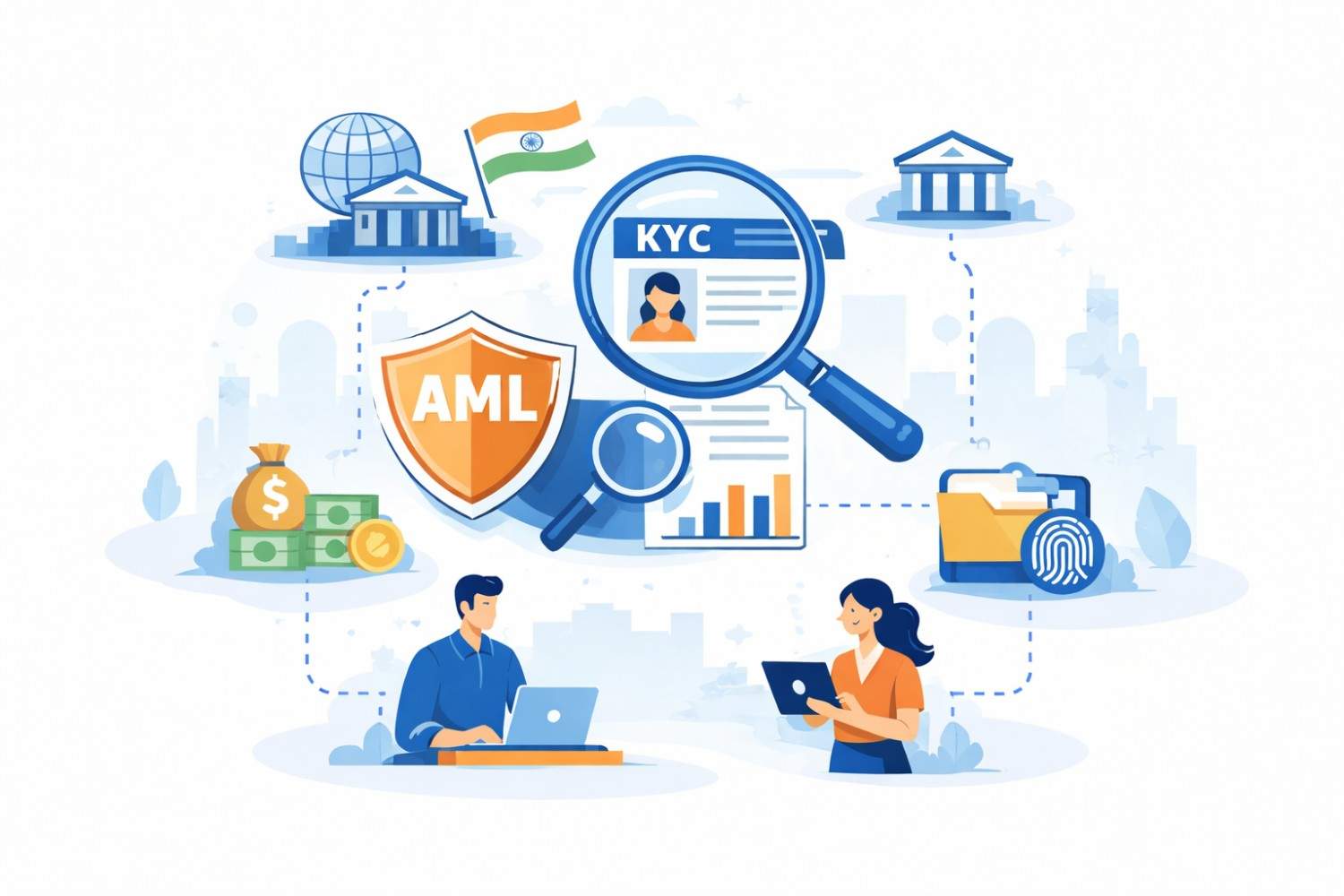
In 2026, Anti–Money Laundering (AML) and Know Your Customer (KYC) compliance is going to be an issue that concerns the entire financial ecosystem and not just banks. Startup or fintech that handles money, enables transactions, offers wallets, facilitates payments, manages investments, issues insurance products, or even provides advisory or professional services around funds, they will have to consider AML compliance as a part of their operations. Many businesses still inexperienced in the field do not face the problem of unclear regulations but rather rely on a fragmented, overly abstract, or post-funding problem guidance. The actual situation is simpler yet stricter: AML and KYC are not optional if any form of monetary value is being processed. They are legal obligations backed by enforcement action, monetary penalties, and risks to the company's reputation. This blog brings together the core legal framework, regulators, and practical compliance steps you cannot ignore in India in 2026.
Why AML and KYC Exist
The main purpose of the AML and KYC regulations is to hinder financial terrorism and to make it impossible for the banking and financial system to be used for money laundering purposes. On a global scale, these obligations are supported by the Financial Action Task Force (FATF), which establishes the global standards that are to be implemented by countries. India established a proper KYC framework in 2002, Money laundering, in legal terms, refers to the concealment of the origin of illegally obtained money, typically by moving it through multiple accounts and transactions so that it appears legitimate.
The laundering process usually unfolds in three stages:
1. Placement - introducing illegal funds into the financial system, often by exchanging currency or depositing cash.
2. Layering - transferring money across multiple accounts or entities to obscure its origin.
3. Integration - reintroducing the funds into the economy as apparently genuine income or assets.
KYC is the first line of defense against this entire process. Its main purpose is to determine the identity of the customer. On the other hand, AML is concerned with the transaction and thereby judging if it is real and legal.
FATF and FIU-IND: The International and Domestic Backbone
FATF was conceived by the G7 nations and founded in 1989. It is now a 40-member intergovernmental body. The FATF's recommendations are recognized worldwide as the standard for AML and KYC policies. Though not formally a treaty organization, its standards are in effect regarded as obligatory for nations wanting to be part of the global financial market. In India, the Financial Intelligence Unit - India (FIU-IND) is the main operational center. FIU-IND acts as a central authority that receives, processes, analyzes, and disseminates information on suspicious financial transactions. It not only coordinates with the local and international agencies but also works closely with the regulators in the concerned sectors.
The Core AML Law in India
The central statute governing AML in India is the Prevention of Money Laundering Act, 2002 (PMLA). This statute delineates the acts of money laundering, identifies the “proceeds of crime,” and establishes the punishments. Moreover, it authorizes the Enforcement Directorate (ED) to undertake investigations and prosecutions. The PMLA (Maintenance of Records) Rules, 2005, which operationalize compliance. These rules explain how long records must be maintained, what information needs to be reported, and how due diligence should be carried out. Over the years, all the amendments have gradually widened the scope of compliance to include digital assets. The PMLA law categorizes every business or professional that deals with, transfers, or facilitates money as a “reporting entity.” Banks, NBFCs, payment processors, brokerages, insurers, and even real estate agents, precious metals and stones dealers, and CPAs, company secretaries, and cost accountants have now been recognized as such entities.
Who Regulates AML Compliance in Practice
AML compliance in India does not sit under a single regulator. It is a multi-agency structure:
1. Reserve Bank of India (RBI) - regulates banks, NBFCs, and payment system operators and issues binding AML-KYC Master Directions.
2. Securities and Exchange Board of India (SEBI) - oversees stockbrokers, mutual funds, portfolio managers, and investment advisers.
3. Insurance Regulatory and Development Authority of India (IRDAI) - regulates life, general, and health insurers.
4. Financial Intelligence Unit - India (FIU-IND) receives and analyzes reports from all reporting entities.
5. Enforcement Directorate (ED) - investigates and prosecutes money laundering offenses under PMLA.
6. Ministry of Finance - notifies additional sectors and professionals into the AML framework.
Every regulator provides anti-money laundering (AML) guidelines that are specific to the sector. A payment application is not subject to the same level of scrutiny as a stockbroker or an insurance company; however, the underlying reasoning behind compliance is still the same.
RBI’s KYC Framework: What Startups and Fintechs Must Internalize
For RBI-regulated entities, KYC obligations flow from directions issued under Section 35A of the Banking Regulation Act. The key structural elements include:
1. Customer Acceptance Policy - every regulated entity must define who it will accept as a customer and under what conditions. Benami accounts and accounts for individuals or organizations sanctioned by RBI are prohibited. A Customer Due Diligence (CDD) process has to be done accompanied by Unique Customer Identification Code (UCIC).
2. Risk Management - accounts must be classified as low, medium, or high risk based on factors such as business profile, geography, source of funds, and transaction complexity.
a) Low-risk accounts: periodic review once in 10 years
b) Medium-risk accounts: periodic review once in 8 years
c) High-risk accounts: periodic review once in 2 years
3. Customer Identification Procedure (CDD) - it must be conducted at the beginning of the account-based relationship and in cases such as international remittances, sale of third-party products, or loading of prepaid instruments. CDD can also be performed by third parties; however, the regulated entity should have a well-defined procedure for their engagement and should still be accountable for compliance. When Central KYC records are utilized, the updated details must be acquired within 48 hours from the Central KYC Registry.
4. Transaction Monitoring - it is necessary that all accounts and transactions be continuously monitored. Entities should set their own internal limits for high-value transactions and review the accounts where the transaction patterns seem unclear or not matching with the customer's profile.
5. Record Management - under PMLA, transaction records must be maintained for at least five years. Customer identification records must be retained for five years from the date the account is closed.
In addition, records must be kept for:
a) Cash transactions above ₹10 lakh (including accounted connected in series)
b) Non-profit organization transactions above ₹10 lakh
c) Counterfeit currency transactions
d) Suspicious transactions
e) Cross-border wire transfers above ₹5 lakh
These records form the basis of mandatory reporting to FIU-IND through RBI.
Mandatory Reports You Cannot Ignore
Reporting entities must file the following:
1. Cash Transaction Report (CTR): Cash transactions above ₹10 lakh, submitted monthly before the 15th of the next month.
2. Non-Profit Transaction Report (NPTR): Non-profit organization transactions above ₹10 lakh, submitted monthly before the 15th.
3. Cross-Border Transaction Report (CBTR): Cross-border wire transfers above ₹5 lakh, submitted monthly.
4. Suspicious Transaction Report (STR): Suspicious transactions identified by the entity, submitted within 7 days of detection.
5. Counterfeit Currency Report: All counterfeit currency transactions in a month, reported to RBI and forwarded to FIU-IND.
Officially Valid Documents and Central KYC
The verification of KYC is done through Officially Valid Documents (OVDs) such as passports, driver's licenses, Aadhaar cards, voter IDs, job cards under MGNREGA, and letters from the National Population Registry. If the address for account opening is different from the one on the OVD, additional address proof is necessary. The recent utility bills (telephone, electricity, postpaid mobile, piped gas, or water bills) are accepted for this purpose but they should not be older than two months. The Central KYC Registry is a centralized repository of KYC records, which allows uniform KYC norms and interoperability among different institutions. When a customer is assigned a unique KYC identifier, they are not required to submit the documents again and again to different financial institutions.
Practical AML Compliance Steps for 2026
While sector-specific obligations vary, most regulated businesses are expected to implement the following foundational controls:
1. Risk-Based Customer Due Diligence - verification of customers should not only focus on the identity of the customers but also cover their behavioral and transactional risk assessments. Customers who are considered to be of a higher risk require close examination.
2. Internal AML Policy - a formal AML policy should define internal roles, reporting lines, escalation paths, staff training protocols, and monitoring mechanisms. Regulators increasingly expect this policy to be approved at board level.
3. Monitoring and Reporting Systems - entities must maintain systems to detect unusual transactions. This may be manual for small setups or automated for high-volume platforms. All suspicious activity must be reported using prescribed formats such as STRs and CTRs.
4. Record Retention - customer and transaction records must be retained for at least five years after the relationship ends or the transaction is completed, whichever is later. Records must be retrievable and regulator-ready.
5. Training and Audits - compliance with AML regulations is an ongoing process and not a one-time event. Regular training for employees and the conducting of internal audits are now considered to be the standard regulatory requirements.
Conclusion
In 2026, AML and KYC for startups as well as fintechs are no longer negligible regulatory requirements. They are now integrated into the very fabric of the business concerning licensing, investor trust, and future growth. The limitations of the framework are not confined to banks anymore. It has now included the entire range of activities like payments, investments, insurance, real estate, professionals, and virtual digital assets. If your business utilizes money in any form, AML compliance is no longer optional but mandatory.
Frequently Asked Questions (FAQs)
1) Is AML and KYC compliance mandatory for startups and fintech companies in India in 2026?
Yes, AML and KYC compliance is mandatory for startups and fintech companies in India in 2026 if they handle money, enable transactions, offer wallets, facilitate payments, manage investments, issue insurance products, or provide advisory or professional services involving funds. Under the Prevention of Money Laundering Act, 2002 (PMLA), such businesses are treated as “reporting entities” and are legally required to carry out customer due diligence, continuous transaction monitoring, record retention, and mandatory reporting to regulators. AML and KYC are not optional formalities; they are enforceable legal obligations backed by penalties, investigations, and reputational risks, making them a core operational requirement for any business that processes monetary value.
2) What is the difference between AML and KYC under Indian law?
Under Indian law, KYC and AML serve related but distinct compliance functions. KYC, or Know Your Customer, focuses on identifying and verifying the customer using officially valid documents such as Aadhaar, passport, voter ID, or a driver’s license, with the primary objective of establishing who the customer is at the time of onboarding and during periodic reviews. AML, or Anti–Money Laundering, is concerned with monitoring transactions and customer behavior over time to determine whether money flows are suspicious, illegal, or inconsistent with the customer’s stated profile. In practice, KYC acts as the first line of defense against money laundering, while AML systems are designed to detect, assess, and report potentially illicit financial activity.
3) Which laws and authorities regulate AML and KYC compliance in India?
AML and KYC compliance in India is governed primarily by the Prevention of Money Laundering Act, 2002 (PMLA) and the PMLA (Maintenance of Records) Rules, 2005, which lay down the legal framework for defining money laundering, maintaining records, and reporting transactions. Sectoral regulation is distributed across multiple authorities, including the Reserve Bank of India for banks, NBFCs, and payment system operators, the Securities and Exchange Board of India for stockbrokers, mutual funds, and investment advisers, and the Insurance Regulatory and Development Authority of India for insurers. The Financial Intelligence Unit - India functions as the central agency for receiving and analyzing transaction reports, while the Enforcement Directorate is responsible for investigations and prosecutions under the PMLA. At the international level, India aligns its AML and KYC framework with the standards issued by the Financial Action Task Force.
4) What reports must startups and fintechs file under AML laws in India?
Startups and fintechs classified as reporting entities are required to submit multiple mandatory reports under Indian AML laws. These include Cash Transaction Reports for cash transactions exceeding ₹10 lakh, Non-Profit Transaction Reports for non-profit organization transactions above ₹10 lakh, Cross-Border Transaction Reports for cross-border wire transfers exceeding ₹5 lakh, and Suspicious Transaction Reports for any transaction that appears unusual, inconsistent with the customer profile, or potentially linked to illicit activity, which must be filed within seven days of detection. In addition, all counterfeit currency transactions occurring in a month must be reported to the Reserve Bank of India and forwarded to the Financial Intelligence Unit - India. Failure to submit these reports can result in regulatory action, financial penalties, and increased scrutiny by enforcement authorities.
5) What are the key AML and KYC compliance steps for startups and fintechs in 2026?
In 2026, startups and fintechs are expected to implement a foundational AML and KYC compliance framework that includes risk-based customer due diligence, formal internal AML policies approved at the board level, and continuous transaction monitoring mechanisms suited to their scale of operations. Businesses must maintain proper systems to detect and report suspicious and high-value transactions to the Financial Intelligence Unit - India using prescribed formats, while also ensuring that customer identification and transaction records are retained for at least five years after the end of the relationship or completion of the transaction. Regulators increasingly view regular employee training and periodic internal AML audits as standard requirements, making ongoing compliance an operational necessity rather than a one-time regulatory exercise.
AUTHOR
Priyansh Tiwari is a 2nd year law student at Maharashtra National Law University Chhatrapati Sambhajinagar, currently interning at SolvLegal.
REVIEWED BY
This blog was reviewed by Rakshika Bajpai, a corporate lawyer specialising in IPR, contract drafting, and compliance advisory. She is a technology-driven legal professional focusing on corporate compliance and data-privacy frameworks at SolvLegal. Her work spans IT law and cross-border regulatory matters, and she supports businesses in protecting their innovations and strengthening their legal and compliance structures.
Check out our Startup Package:
https://solvlegal.com/legal-services/startup-package/trademark-contracts-msme-package/
Also do Look out for our KYC and AML Policy:
https://solvlegal.com/contract-template/know-your-customer-kyc/
https://solvlegal.com/contract-template/anti-money-laundering-policy/

Related Articles


Leave a Comment

.jpeg "How to Protect an App Idea: Copyright, Design and Patent Explained")