Are Franchisees Operators or Uncredited Seed Investors?
Read More
Starting a Company in India? Complete Company Registration Process, Cost & Mistakes to Avoid (2026 Guide)
By the SolvLegal Team
Published on: Jan. 16, 2026, 9:11 p.m.
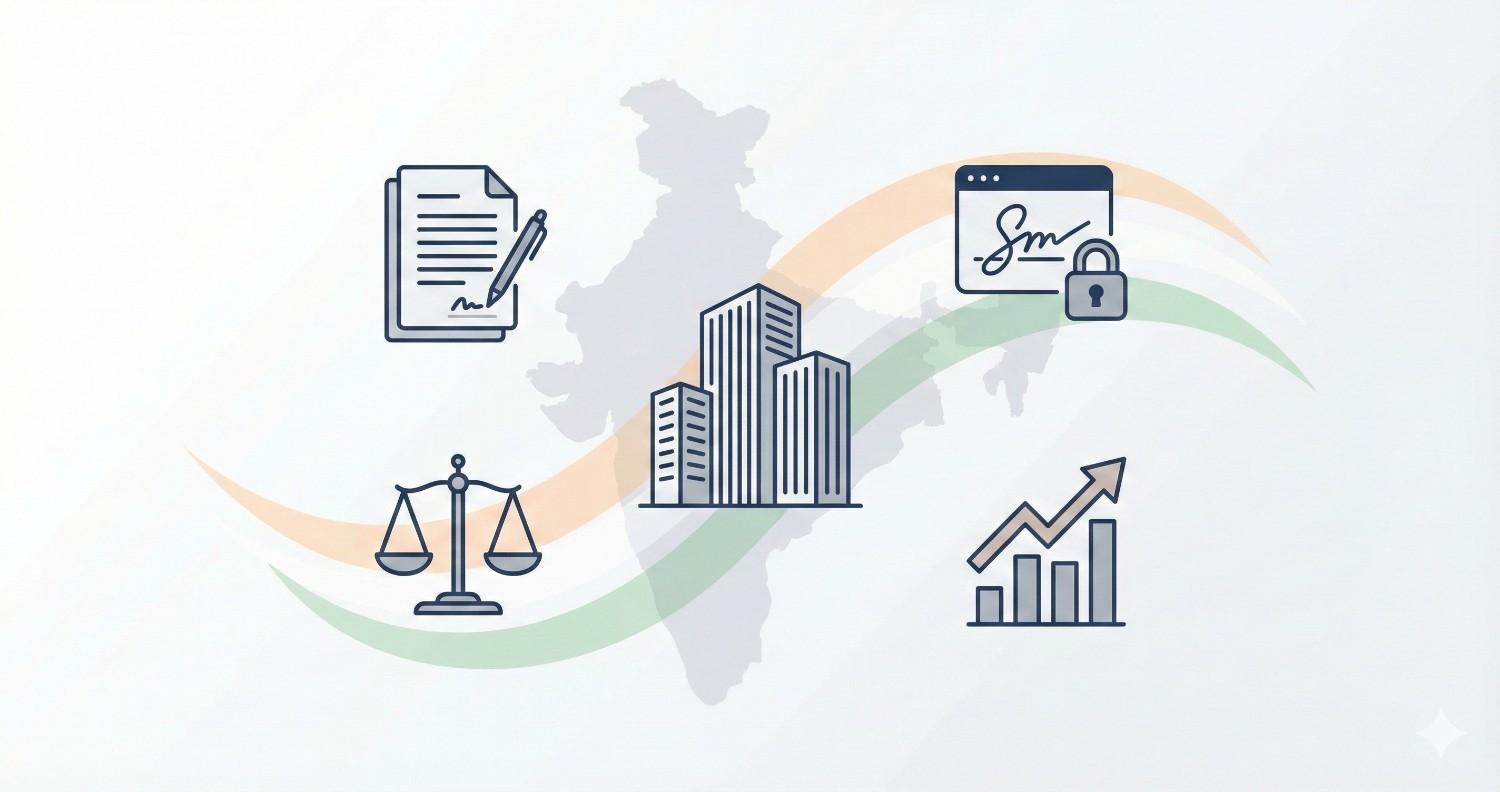
Starting a Private Limited Company (Pvt Ltd) is one of the most structured and widely recognized way of doing business in India. With the number of registered companies in India now exceeding 2.89 million, it is clear that this business structure continues to be the preferred choice for entrepreneurs. On the other hand despite its widespread adoption, many individuals remain uncertain about the actual registration process, associated costs, and compliance requirements about the registration of a private limited. To simplify this and provide clarity, this blog walks through the entire Private Limited Company journey- explaining what a Pvt Ltd company is, how it is registered, the costs involved, the compliance obligations, and the common mistakes that should be avoided.
Understanding a Private Limited Company and Its Legal Framework
As discussed above, a Private Limited Company is one of the most popular way of conducting a business in India. It is suitable for early-stage startups, funded ventures, growing enterprises, and even family-run businesses that want a formal and legally recognized structure. A Pvt Ltd company is incorporated and regulated by the Ministry of Corporate Affairs (MCA), which is responsible for administering companies in India.
Once registered, a Private Limited Company is recognized across India and enjoys a secure and protected company name. Most importantly, the company becomes a separate legal entity, meaning it exists independently from its directors and shareholders. This separation forms the foundation for limited liability, structured ownership, and regulatory compliance.
Mandatory Professional Involvement Before Registration
One of the most important practical points founders must know is that Private Limited Company registration cannot be completed independently unless the applicant is a practising Chartered Accountant (CA), Company Secretary (CS), Cost and Works Accountant (CWA), or Advocate. If you are not one of these professionals you cannot set up a Private Limited Company on your own using the MCA portal. You will need an Accountant or a Company Secretary or a Cost and Works Accountant or an Advocate to help you with the Company registration.
This requirement exists because all incorporation forms filed on the MCA portal must be certified and attested using the professional Digital Signature Certificate (DSC) of a CA, CS, CWA, or Advocate. Without professional attestation, the forms cannot be uploaded or approved by the Government. Even if a founder prepares all documents correctly, the final submission and certification must be completed by a qualified professional to ensure legal accountability.
Eligibility Conditions and Documentation Requirements
To start a Private Limited Company in India you need to do certain things. First you need to have least two people involved. If you are the one who wants to start the company you can ask a family member like a parent or spouse to join as a director or shareholder. Private Limited Company in India needs to have least one director who lives in India. You also need to have a registered office address for your Private Limited Company in India which can be your home address. All the directors of the Private Limited Company, in India have to get a Class 3 Digital Signature Certificate.
When it comes to paperwork the company directors and shareholders are required to submit their PAN card, proof of identity such as Aadhaar, Passport, Voter ID or Driving Licence, residence proof in the form of a bank statement or utility bill, and a passport-size photograph. For the registered office address, an electricity bill, rent agreement or ownership proof, and a No Objection Certificate (NOC) from the owner (if rented) are required. Other essentials include proposing two unique company names and submitting documents necessary for DSC issuance, such as PAN, Aadhaar, photograph, email ID, and mobile number.
Step-by-Step Process of Private Limited Company Registration
The process of registering a Private Limited Company follows the SPICe+ framework, this must be completed through the MCA portal. The first step involves creating MCA user IDs for all directors and registering their DSCs on the portal. This enables authenticated access to file incorporation forms.
The second step is name approval through SPICe+ Part A, where an application is made to reserve the company name. If the proposed name is trademarked, supporting trademark documents must be attached at this stage.
The final step is incorporation through SPICe+ Part B, which includes filing details related to the company’s structure, registered office address, director information, and stamp duty. Along with this, PAN and TAN are applied for automatically, and statutory documents such as INC-33 (Memorandum of Association) and INC-34 (Articles of Association) are filed. All these forms must be certified and uploaded using the professional DSC of a CA, CS, CWA, or Advocate.
Cost, Annual Compliance, and Common Mistakes to Avoid
The cost of setting up a Private Limited Company involves three main components. The cost of a DSC generally ranges between ₹1,000 and ₹1,200 per director. Government fees depend on state-wise stamp duty and authorized share capital. Professional fees charged by CA, CS, CWA, or Advocates typically range from ₹8,000 to ₹15,000. So when you add all these costs for a Private Limited Company the total cost to incorporate a Private Limited Company in India in 2026 is usually between ₹10,000 and ₹18,000, for the Private Limited Company.
After incorporation, annual compliance of the company becomes mandatory. The company must file its Income Tax Return separately, maintain a chartered accountant audited financial statements, and submit MCA annual filings such as AOC-4 i.e. mandatory e-form for companies to file their audited financial statements and MGT-7 i.e. mandatory e-form for filing the Annual Return. A statutory auditor must be appointed within 30 days of incorporation. The average annual compliance cost generally ranges from ₹6,000 to ₹15,000, depending on turnover and complexity.
However, while a Private Limited Company offers several advantages, founders should also be fully aware of its practical drawbacks and responsibilities. A Pvt Ltd company comes with mandatory annual maintenance and compliance costs, regardless of whether the business is actively generating revenue. The penalties for non-compliance or delays in filing can be very high, and very often the penalty for the delay is compounded, thus making it hard to handle.
One more very essential point that needs to be seen is public disclosure. All the important aspects of the company, such as the directors, the shareholding patterns, and the financial filings, are all visible to the public as the company records are stored in the MCA portal. While this promotes transparency, it also means that competitors, vendors, or other third parties can easily review the operational and financial status of your company.
Founders sometimes commit errors that could have been avoided during the incorporation process and after the process. Typical mistakes include choosing a company name without proper trademark searches, underestimating compliance and audit costs in the future, and submitting incorrect and/or outdated proofs of address. Many also fail to appoint a statutory auditor within the prescribed timeline or delay annual MCA and tax filings, leading to unnecessary penalties. Another misconception that is commonly held is related to the assumption that company closure is a fast and cheap process, whereas it is actually a legal process that has to be followed. Additionally, appointing friends or family members as directors without understanding the legal duties and liabilities attached to the role can create serious compliance and governance issues in the long run. Understanding these limitations at the beginning helps founders make informed decisions and manage their company in a more responsible manner.
Practical Benefits of Registering a Private Limited Company
One of the most significant benefits of a Private Limited Company is name security. Once a company such as XYZ Private Limited is registered, no other company in India can be incorporated with the same or a deceptively similar name. This means that the company has its brand identity secured right from the start.
A Pvt Ltd company also enjoys visibility in the public domain. Its details become searchable on the MCA website and are visible across online business platforms, allowing customers, vendors, banks, and investors to independently verify the company’s existence, this benefit may also become. This transparency directly contributes to business credibility. Another key advantage is the concept of separate legal entity and limited liability. The company and its owners are treated as legally distinct persons. Personal assets of directors and shareholders is not at risk and liability is confined to the amount invested in the company only. In such scenarios, individual business losses do not necessarily lead to a personal financial risk.
Private Limited Companies are also preferred for fund raising, both via equity and debt. They can attract capital from angel investors and venture capitalists, issue shares and preference shares, all of which may suit the startups that are looking for rapid growth. Besides, Pvt Ltd companies can have foreign directors or shareholders, provided that they comply with FEMA and RBI regulations, which facilitates global investment and cross-border growth.
Pvt Ltd companies, at last, are trusted more than other company types by the employees, vendors, customers, banks, and financial institutions. This credibility plays a crucial role in hiring talent, negotiating contracts, and accessing finance.
Frequently Asked Questions (FAQs)
1. Can I register a Private Limited Company in India on my own without a professional?
No. A Private Limited Company cannot be registered independently unless the applicant is a practising Chartered Accountant (CA), Company Secretary (CS), Cost and Works Accountant (CWA), or Advocate. This is because all incorporation forms filed on the MCA portal must be certified and attested using the professional Digital Signature Certificate (DSC) of one of these professionals. Without such professional certification, the forms cannot be uploaded or approved by the Government through the Ministry of Corporate Affairs (MCA) portal.
2. What are the minimum requirements to start a Private Limited Company in India?
To start a Private Limited Company in India, there must be at least two persons involved. If there is only one promoter, a family member such as a parent or spouse can be added as the second director or shareholder. The company must have at least one resident director, a registered office address in India (which can be a residential address), and Class 3 Digital Signature Certificates (DSC) for all directors. These requirements are mandatory for incorporation.
3. What is the total cost of registering a Private Limited Company in India in 2026?
The total cost of incorporating a Private Limited Company in India in 2026 generally ranges between ₹10,000 and ₹18,000. This includes the cost of obtaining DSCs (₹1,000–₹1,200 per director), government fees which vary based on state-wise stamp duty and authorized share capital, and professional fees charged by CA, CS, CWA, or Advocates, which usually range from ₹8,000 to ₹15,000.
4. What compliances are mandatory after incorporating a Private Limited Company?
After incorporation, a Private Limited Company must comply with several annual requirements. These include filing a separate Income Tax Return, maintaining audited financial statements, and submitting MCA annual filings such as AOC-4 (for audited financial statements) and MGT-7 (for annual return). Additionally, a statutory auditor must be appointed within 30 days of incorporation. The average annual compliance cost generally falls between ₹6,000 and ₹15,000, depending on the company’s turnover and complexity.
5. What are the common mistakes founders should avoid while setting up a Private Limited Company?
Common mistakes include choosing a company name without conducting proper trademark checks, underestimating future compliance and audit costs, submitting incorrect or outdated address proofs, failing to appoint a statutory auditor within the prescribed timeline, and delaying annual MCA or tax filings. Another frequent misconception is assuming that closing a Private Limited Company is quick and inexpensive, whereas it involves a structured legal process. Appointing friends or family members as directors without understanding their legal duties and liabilities can also lead to serious compliance and governance issues.
AUTHOR
Priyansh Tiwari is a 2nd year law student at Maharashtra National Law University Chhatrapati Sambhajinagar, currently interning at SolvLegal.
REVIEWED BY
Gaurav Saxena a corporate lawyer focusing on company law, commercial agreements, and compliance strategy. He is the Founder of SolvLegal and a dual-degree professional with expertise in Law and Engineering. A graduate of the University of Lucknow, he has a deep understanding of Contract Law, Corporate Law, Intellectual Property Rights, Information Technology Law, and Data Privacy.

Related Articles
.jpg "Are Franchisees Operators or Uncredited Seed Investors?")

Leave a Comment