Cyber Law Compliance Checklists for Startups and Businesses
Read More
How to Comply with the DPDP Act in India: A Practical Checklist for Startups and Businesses
By the SolvLegal Team
Published on: March 18, 2026, 4:24 p.m.
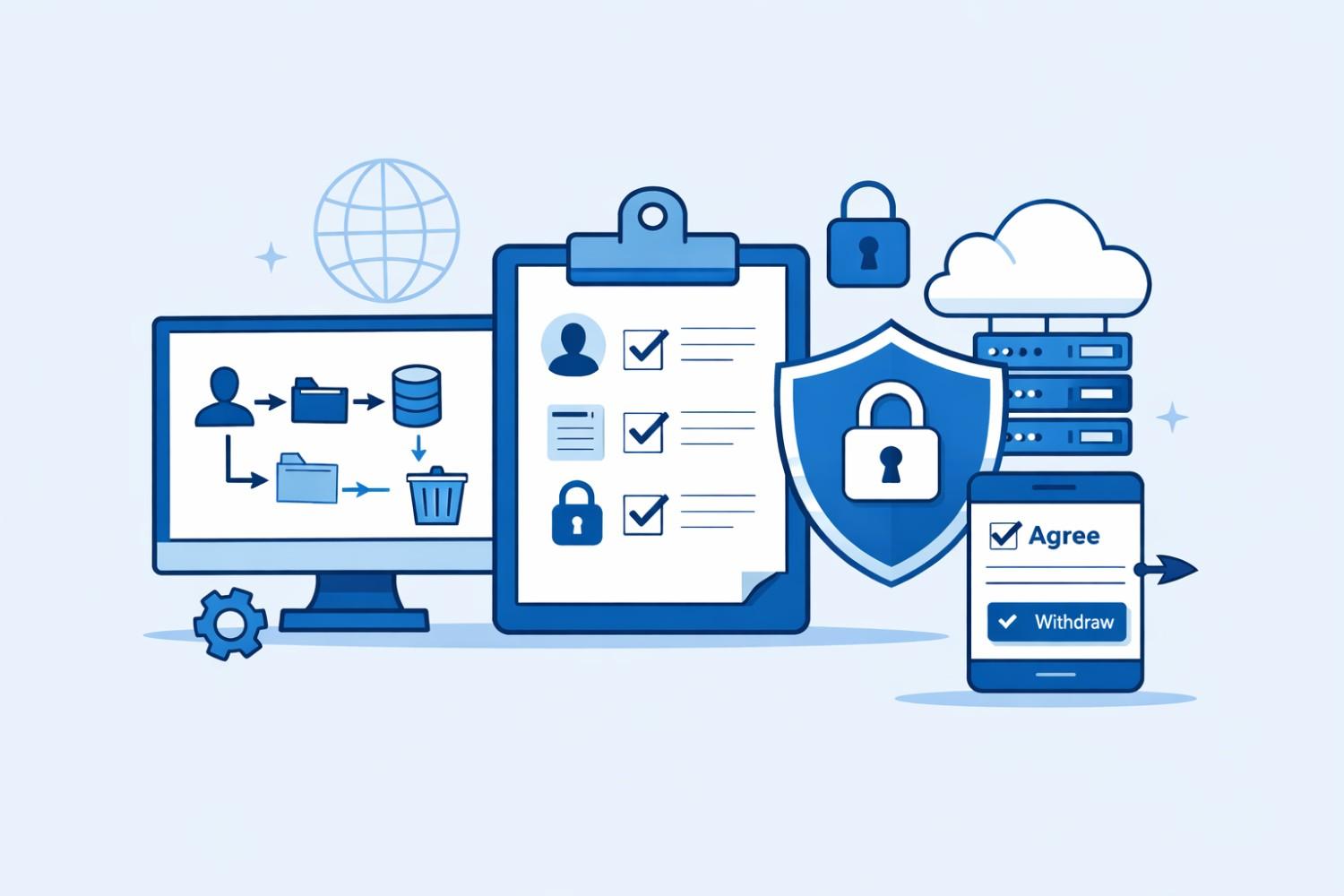
Quick Answers
· Start with data mapping. First, list every piece of personal data you collect, where it comes from and where it goes (storage locations, cloud services, vendors, etc.). This “data inventory” is the foundation of compliance.
· Design clear consent flows. Every time you collect user data (sign-ups, forms, apps), use plain-language notices that spell out what data and why, and get explicit opt‑in. Consent under the DPDP Act must be “free, specific, informed, unconditional and unambiguous”. Include an easy mechanism for users to withdraw consent (as easy as giving it) and keep logs.
· Update privacy notices and UI. Your privacy policy and any consent pop-ups should be rewritten in simple language. Include all required details (data categories, purposes, retention, and contact info). Ensure users can review or change their consent at any time via your website or app.
· Review vendor/processor contracts. For every third-party service that handles personal data (cloud vendors, analytics, payment gateways, etc.), update the contract to flow down DPDP obligations. Explicitly require security safeguards, breach‑notification, data deletion on exit, audit rights, and processor accountability. Do due diligence on their compliance too.
· Set up rights and grievance processes. Have a system for users to exercise rights (access, correction, erasure). Verify requester identity securely. Resolve any data complaints quickly (the Act expects turnaround in 30–45 days). Document everything.
· Implement security and retention policies. Encrypt sensitive data, enforce access controls, and perform regular audits or penetration tests. Keep logs and incident response plans so you can meet the law’s 72‑hour breach reporting requirement. Only retain data as long as the purpose requires, then delete it securely.
· Assign responsibilities and train staff. Designate a privacy lead (a DPO if you become a Significant Data Fiduciary) and train teams on these rules. Even sales or support staff who touch customer data need awareness. Update internal policies (data handling, retention, access roles) and audit them regularly.
Every step above comes from best practice guidance and the DPDP Act itself. For a startup, following this checklist now will build user trust and avoid penalties (up to ₹250 crore) later.
Getting Serious About DPDP Compliance
The Digital Personal Data Protection (DPDP) Act, 2023 is India’s first comprehensive data privacy law. It places strict new rules on how businesses collect, use, and share any “digital personal data” of individuals in India. If you process user data online (for services, apps, marketing, etc.), you likely fall under the Act. Non‑compliance isn’t optional, the fines are steep (up to hundreds of crores). See New DPDP Rules Explained in simple steps.
Many startup founders feel confused: What counts as personal data? What actually needs consent? How do I change all my forms and contracts? It can indeed be overwhelming at first. But the solution is to break it down into clear, practical steps, one piece at a time. Think of this blog as your DPDP compliance checklist. We’ll tackle your biggest fears first: avoiding fines and losing user trust. Then we’ll walk through each key area like data mapping, consent, vendor contracts, security, and more in plain language. By the end, you’ll have a step‑by‑step roadmap you can actually implement, not just abstract theory.
“Don’t wait for perfect clarity,” advises privacy experts. “Build the operational basics now fixing compliance retroactively is slower and more expensive”. In other words, start implementing the big requirements today. We’ll explain exactly how to do that, and what can wait. Don't know how to register for a startup? Check out our guide on Startup India Registration Explained.
Step 1: Map Your Data Flows
Before anything else, know what data you have and where it goes. This is called data mapping or data inventory. It may sound tedious, but it’s the foundation. You can’t protect data you haven’t even identified.
· Identify all personal data: List every kind of personal data your startup collects or processes. This includes user profiles, email addresses, payment info, marketing data, employee records, etc. Don’t forget hidden sources like old spreadsheets, marketing tools, CRM exports, or backups. (One compliance guide bluntly says: “Identify each data point in your products and in your vendors’ systems that constitute personal data”.
· Document sources and destinations: For each data point, note where it comes from (website forms, third‑party tool, offline collection) and where it’s stored (databases, cloud servers, partner platforms). Specify who has access to it (which employees, third‑party services, or external partners).
· Chart the flow: Draw a simple flow diagram or table: Data, Storage, Access, Sharing, Deletion. For example, “Customer email addresses” might flow from a signup form store in Mailchim to be accessed by the marketing team and shared with our analytics vendor and deleted one year after user inactivity. This matches expert advice to “map your data flows (collection to storage then sharing and then deletion)”.
· Determine the lawful basis: Next to each flow, record why you process the data. Under DPDP, processing is allowed only if you have a lawful basis (often consent), or an exemption (like contractual necessity or public interest). For each data point, ask: “Do we have user consent to process this? Or is there another legal justification?”. For most startups’ consumer data, consent will be the main basis, so plan to obtain or re‑obtain it (see next section).
· Set retention rules: Finally, decide how long you need to keep each category of data. Under DPDP, you shouldn’t hold data longer than necessary for the stated purpose. Note the retention period (days/weeks/years) for each flow. You’ll enforce this with deletion routines later on.
A completed data map lets you answer questions like: What data do we collect on users? How long do we keep it? Which vendors have access to? This clarity makes everything else possible.
Citing industry guidance, one DPDP checklist emphasizes exactly this step: “Map your data flows (collection, storage, sharing, deletion)”. In practice, that means reviewing code, databases, and contracts right now. Don’t wait; some data (like logs or backups) can slip through the cracks if you’re not careful. Once your map is done, you’ll know where to apply consent forms, security controls, and contractual terms.
Step 2: Design Consent and Notice Flows
Because DPDP is fundamentally a consent‑based law, handling user consent correctly is crucial and often the trickiest part. In simple terms, whenever you collect personal data, the user must opt in under DPDP’s strict standards.
· Consent must meet DPDP standards. Legally, consent under the Act “shall be free, specific, informed, unconditional and unambiguous, with a clear affirmative action”. That means no pre‑checked boxes, and no bundling of unrelated purposes. You must clearly list each specific purpose for data use. (For example, asking for an email to send newsletters is one purpose; using it for targeted ads is another. Each needs its own opt-in). Consent must also be revocable at any time (see below).
· Separate, plain-language notices. When asking for consent, do it with a standalone notice or popup, not buried in your Terms of Service. The notice should be short and in plain language (in English or any official Indian language) explaining what data you collect and why. Include the contact info of your Data Protection Officer (or other point of contact). For example, one source advises: “Every request for consent…shall be presented…in a clear and plain language… providing the contact details of a Data Protection Officer…”. Users should never be confused by legal jargon; they must understand exactly what they agree to.
· User interface for consent. Wherever you capture personal data (sign-up forms, app permissions, checkout pages), update the UI. For consent, replace checkboxes or pop-ups with explicit opt-in controls. Each consent request should include a mini-notice summarizing the purpose, and a link to the full privacy notice. (Keep a layered approach: brief on-page notice and detailed policy.) Provide an easy “I agree” button or similar clear action. Also, it includes an easy way for users to change their mind. For example, a settings page or unsubscribe link can serve as the withdrawal mechanism. The law puts it bluntly: withdrawal must be “comparable to the ease with which such consent was given”. Practically, that means a user should be able to opt out with one click. Fisher Phillips notes consent notices must have “a dedicated mechanism allowing Data Principals to withdraw consent, with withdrawal being as easy as giving consent.
· Record and manage consent. Under DPDP, you must prove that you obtained valid consent. That means logging who consented, when, and to what. Implement a consent management solution if needed. In fact, MeitY has even released a technical blueprint for a Consent Management System (CMS), a software framework with a user dashboard, notifications, and grievance tools for handling consents. While you’re not required to use MeitY’s CMS, this signals that your system needs to track every consent event centrally. Keep records that can be produced in an audit: e.g., timestamped logs, copies of consent forms, and withdrawal logs.
In short, rewriting your consent flows is step two. The startup checklist is clear: “Rewrite notices and consent for clarity and purpose specificity”. For each data collection point identified in Step 1, update the consent request, so it meets DPDP rules. Provide multi-language notices (users can choose their preferred Indian language). Insert the names or links to your grievance and withdrawal processes. Involve your developers to update the front-end UI and your legal/marketing team to craft the copy.
Step 3: Handle Data Subject Rights and Grievances
The DPDP Act gives individuals strong rights over their data. You need policies and procedures to honor these rights quickly.
· Enable rights requests. The Act empowers users (“data principals”) to access, correct, erase or transfer their data, and to restrict processing. Set up a simple way for users to submit requests (e.g. a web form, email or portal). Make it easy for them to specify what they want (a summary of their data, corrections, deletion, etc.). For example, one guide advises: “Develop a streamlined and accessible system for customers to submit requests related to their data rights including access, correction, and erasure of their personal data”. You should publish a privacy policy section on how to exercise these rights and have a dedicated contact (often the DPO) to handle them.
· Verify requesters. When someone exercises a right, you must verify their identity to prevent fraud. For instance, you might require a signed declaration or additional login steps. Special care is needed if someone is requesting data on behalf of a minor or a deceased person (DPDP allows nomination of representatives).
· Timely response. DPDP rules generally require responding to rights requests within a fixed time (often 30 days, with a possible 30-day extension). While the Act’s final rules may clarify exact timelines, best practice is to set an internal SLA (service-level agreement). Document each request, your response, and any reasons for delays.
· Erasure and portability. If a user asks for deletion (erasure of personal data), you must carry this out across all systems. That means not only deleting it from your database but also instructing any processors to delete it. The guidance says: “Ensure that any data erasure requests are effectively communicated and executed across all relevant data processors and systems”. Similarly, data transfer requests, be prepared to provide the data in a machine-readable format.
· Grievance redressal. Every business must establish a grievance mechanism. That’s an internal process to handle customer complaints about data use. Appoint a person (often the DPO or legal head) to be the contact point. DPDP specifies that grievances be resolved quickly (the draft rules gave firms 30 days to respond, startups get 45 days). Make your process clear: e.g., “Email privacy@yourcompany.com with DPDP complaints.” Log each grievance and how you resolve it. If a user remains unsatisfied, they can approach the Data Protection Board (the government regulator), so track escalations also.
Following a checklist, organizations are told to “Set up grievance redressal protocols” and be ready to resolve issues within about 90 days. In practice, that means having a policy (maybe in your employment manual) and running drills, so staff know what to do if someone invokes their rights. Document the entire process to show regulators you’ve taken seriously.
Step 4: Update Vendor & Processor Agreements
You are responsible for your users’ data even when it’s handled by others. Under DPDP, any third-party that processes data on your behalf (a “Data Processor”) must follow your instructions and meet certain security standards. Your contracts should reflect this clearly.
· Treat contracts as compliance tools. Think of each vendor agreement or cloud MSA as a mini‑privacy contract. Insert clauses that mirror DPDP obligations. For example, require the processor to implement “reasonable security safeguards” and to notify you immediately of any breach. The ANDE guide explicitly warns: “Organizations should review vendor contracts to ensure they reflect statutory duties, including reasonable security safeguards and clear allocation of responsibilities”. If your current contract is generic, update it to include DPDP-specific language.
· Define roles and restrictions. Spell out in writing who is the Data Fiduciary (you) and who is the Data Processor (vendor). Specify that the processor can only act on your instructions. Include a right to audit or inspect the processor’s compliance. Require sub processors to be approved by you and maintain a registry of any subcontractors with their locations and services. In short, contractually force them to meet the law’s standards. A compliance checklist tip calls this a “Vendor DPDP Addendum, SCC style clauses; right to audit” (akin to standard contractual clauses).
· Breach terms. Build in breach notification terms. The DPDP Rules will require you to notify the Data Protection Board within 72 hours of discovering a breach. Your vendor contract should say the processor must notify you immediately when they learn of a breach involving your data. Also clarify timelines: for instance, define “awareness of breach” and set internal response steps so you can meet DPDP’s 72-hour reporting requirement.
· Data deletion and return. Require that when the contract ends, the vendor must delete or return all personal data and confirm it in writing. This closes the loop on data flows. For backups, insist on deleting retained data too (or leaving it encrypted if immediate deletion isn’t possible).
· Ongoing due diligence. Don’t stop at one review. New vendors may come onboard, and threats evolve. Regularly audit third parties’ security postures. Update their contracts as laws change. The Legality guide recommends “regularly reviewing and updating vendor contracts to ensure ongoing compliance”.
In practice, a privacy-oriented contract team would create a Data Processing Agreement (DPA) addendum for every vendor that handles personal data. A DPA is a standard document that imposes exactly these obligations: security standards, sub‑processor rules, audit rights, breach of handling, and so on. If you already have DPAs for other regulations (like GDPR), adapt those to DPDP requirements. If not, consider using template clauses provided by legal counsel. The key is: contracts must enforce compliance. As one blog puts it, “Vendor behavior is shaped by contracts: audit rights, sub-processor controls, and service credits give practical levers to improve outcomes”.
Step 5: Enforce Security and Retention Policies
DPDP mandates that every data fiduciary implements “reasonable security safeguards”. Think of this as the cyber-protection layer around your data. Even if you’ve had basic IT security, DPDP means reviewing and tightening it systematically.
· Technical safeguards: Use strong encryption for sensitive personal data (both in transit and at rest). Enable multi-factor authentication for internal systems holding personal data. Conduct regular security audits or vulnerability scans. For web applications, do quarterly penetration tests by security experts. Maintain access logs for all critical systems. A compliance guide succinctly notes businesses should “encrypt information, control access to information, and monitor” personal data.
· Organizational measures: Apply role-based access controls (only allow employees to see data they absolutely need). Provide cybersecurity training so staff avoid phishing and password mistakes. Keep an inventory of all assets (servers, laptops) that store personal data and ensure each device has up-to-date antivirus/patches.
· Breach preparedness: Have an incident response plan on paper before a breach happens. Define roles (who will investigate, who will notify customers, etc.) and timelines. Remember, DPDP requires notifying the Data Protection Board and affected individuals within 72 hours of becoming aware of a “personal data breach” (rules will spell this out). Your plan should include a checklist of evidence to preserve, a communications template, and a post-mortem procedure. As one guide advises, “Implement a robust incident response plan for potential data breaches, ensuring swift action and compliance with DPDP Act reporting requirements”. Practice this plan for drills.
· Data retention and deletion: Only keep data as long as needed for the purpose. For example, if you said you’d keep sign-up data for one year, make sure it is actually deleted at that point. Automate deletions when possible (scripts or software that purge records after a set time). Do not hoard data “just in case.” Clearly document your retention schedules (e.g., email addresses: 1 year; login logs: 3 months, etc.) and enforce them. The ANDE checklist reminds us to “fix retention logic (purpose‑led, documented, and executable)”.
Put another way: security and retention are as crucial as consent. Startups often think only of building features, but now legal obligations require build-in safety. Citing experts: “Privacy compliance is no longer optional… processing without valid consent or safeguards is a violation”. So, encrypt everything you can, require strong passwords, and be ready to prove it. This is not just a bullet in a manual it literally safeguards your business reputation.
Step 6: Assign Roles, Train Teams, and Audit Continuously
Data privacy compliance is a team effort. It must be integrated into your company culture and operations. Here’s how to stay on track:
· Appoint a privacy lead (or DPO). Even if you’re a small startup, designate someone (often a founder or a senior employee) responsible for DPDP compliance. For larger firms or “Significant Data Fiduciaries,” the law will require a formal Data Protection Officer (DPO). This person’s job is to oversee mapping, policies, notices, breach response, audits, and serve as point-of-contact for data authorities. For startups, one guide suggests hiring or assigning a Chief Information Officer (CIO) and DPO to “oversee data management and security”, jump-start the compliance efforts, and handle complaints.
· Write and update policies. Draft a Data Protection Policy and standard operating procedures. These should cover all aspects: data collection rules, consent management, data retention schedule, incident response steps, etc. Make them specific to your business (e.g., “We encrypt all payment data with AES-256 encryption”). Save these documents and ensure they’re approved at a high level (e.g., board or founders) as evidence of accountability. Keep them up to date as laws or business models change.
· Train your team. Make data privacy training mandatory for anyone who handles personal data. This means more than a slide deck do hands-on sessions or e‑learning modules. Explain why consent matters and what a breach looks like. A cited checklist emphasizes: “train frontline staff (field teams are now compliance stakeholders)”. In other words, everyone sales, customer support, developers should know basic DPDP do’s and don’ts. Tie training completion to HR processes (onboarding and annual refreshers).
· Schedule audits and reviews. Compliance isn’t a one-off project. Set up a regular cadence: quarterly or semi-annual reviews of your data inventory, vendor list, policies, and logs. Simulate a breach of response to test your readiness. The ANDE guide explicitly recommends “quarterly reviews” rather than panic driven fixes. Keep an internal risk register and update it when you launch a new feature that processes personal data (for example, adding geolocation tracking or new AI analytics would trigger a fresh data mapping and risk check). Document these reviews if the Data Protection Board audits you someday, evidence of ongoing efforts will reduce penalties.
In short, build a privacy framework: clear responsibilities, written policies, well-informed employees, and routine checks. This shifts compliance from a scary “maybe later” task to a normal business operation. As one expert put it, data protection is “an actionable requirement every business… must observe”. By embedding it into your processes now, you make future compliance much smoother.
What About Startups?
You might wonder if these rules apply to tiny firms. The government recognizes that and has proposed limited relief for small startups. Under draft rules, a “Notified Start-up” (revenue < ₹40 crores and under 1 lakh users) could skip certain tasks: no formal Data Protection Impact Assessments (DPIAs) or independent audits, and a longer 45-day window to resolve grievances instead of 30 days. The draft even provides template privacy notices, and clause sets to speed things up.
However, don’t take this as a license to ignore the basics. Even if your startup qualifies for simplifications, you still must meet core obligations: valid consent for all processing, adequate data security, and prompt breach notifications. In other words, follow the checklist above. The relief mostly means you can delay some advanced governance (like annual audits) and have a few extra weeks to resolve complaints. But day-to-day compliance steps, mapping data, implementing consent and deletion, securing data, and updating contracts, apply to everyone.
Conclusion: Compliance Is Also Trust-Building
It’s understandable to feel overwhelmed by the DPDP Act. But remember, compliance isn’t just about avoiding fines. It’s also about demonstrating to your users and partners that you take their privacy seriously. In the digital age, a strong privacy posture can become a competitive advantage for a startup.
This checklist covers the main areas you need to tackle, know your data (mapping), get real consent, respect user rights, write clear policies, secure your systems, and contractually bind your vendors. If you follow these steps, you’ll not only be DPDP-ready by the deadlines (the law is being phased in through 2027), but you’ll also earn customer trust.
Always keep a practical mindset: treat compliance as an ongoing program, not a one-time fix. Use the official DPDP Act provisions and the rules (once published) as your guide and refer to reputable legal advice when needed (privacy is a “legal minefield” with many details).
In short: Don’t panic, plan. If you act now, prioritize the must haves (mapping, consent, contracts, security), and continuously improve your processes, you’ll turn compliance from a scary obligation into a sound business practice.
Frequently Asked Questions
Q1- What is the DPDP Act and does my startup need to care?
A: The Digital Personal Data Protection (DPDP) Act is India’s primary law for digital personal data. If you collect, store, use, or share personal data of people in India, you must follow core obligations like notice, consent, security and breach reporting.
Q2- When do the DPDP obligations become enforceable?
A: The rules use a phased rollout. The Data Protection Board became operational on notification. Consent-manager rules and related features roll out later. Full core obligations are being phased in and are expected to be enforced by the final compliance date (phased timeline published by the ministry and legal updates).
Q3- What exactly counts as valid consent under DPDP?
A: Consent must be free, specific, informed, unconditional and unambiguous, shown by a clear affirmative action. No pre-checked boxes. You must tell users what data you collect and why, in plain language.
Q4- Do I need to re-collect consent from existing users?
A: If prior consent was vague or bundled, you should re-notify users and re-solicit consent using DPDP-compliant notices as soon as practicable. The Act requires updating prior consent notices and offering users the choice.
Q5- How fast must I report a data breach?
A: The law and rules require quick incident handling and regulatory notification. Practical guidance and industry summaries expect firms to notify regulators and affected users quickly; many guides use a 72-hour internal reporting benchmark to meet rule timelines. Plan your incident workflow around that SLA.
Q6- What are the fines or penalties for non-compliance?
A: Penalties are significant. Depending on the violation, fines can be very large, with maximum penalties reported in government and industry summaries up to several hundred crores (figures and bands are set out in the Act and Rules). Treat security and breach reporting as high-risk priorities.
RELATED ARTICLES
India’s New DPDP Rules Explained: What Startups and SMEs Must Do in the Next 18 Months
Startup India Registration Explained: Eligibility, Benefits & How Founders Can Apply in 2026
Why Startups Fail After Signing Standard Contracts: Hidden Clauses Founders Ignore
DISCLAIMER
The information provided in this article is for general educational purposes and does not constitute legal advice. Readers are encouraged to seek professional counsel before acting on any information herein. SolvLegal and the author disclaims any liability arising from reliance on this content.

Related Articles


Leave a Comment