Contract Signed but Not Stamped or Registered: Is It Still Valid?
Read More
White Label Agreements Explained: When You Need a White Label SaaS Agreement (2026 Global Guide)
By the SolvLegal Team
Published on: Jan. 21, 2026, 12:20 p.m.
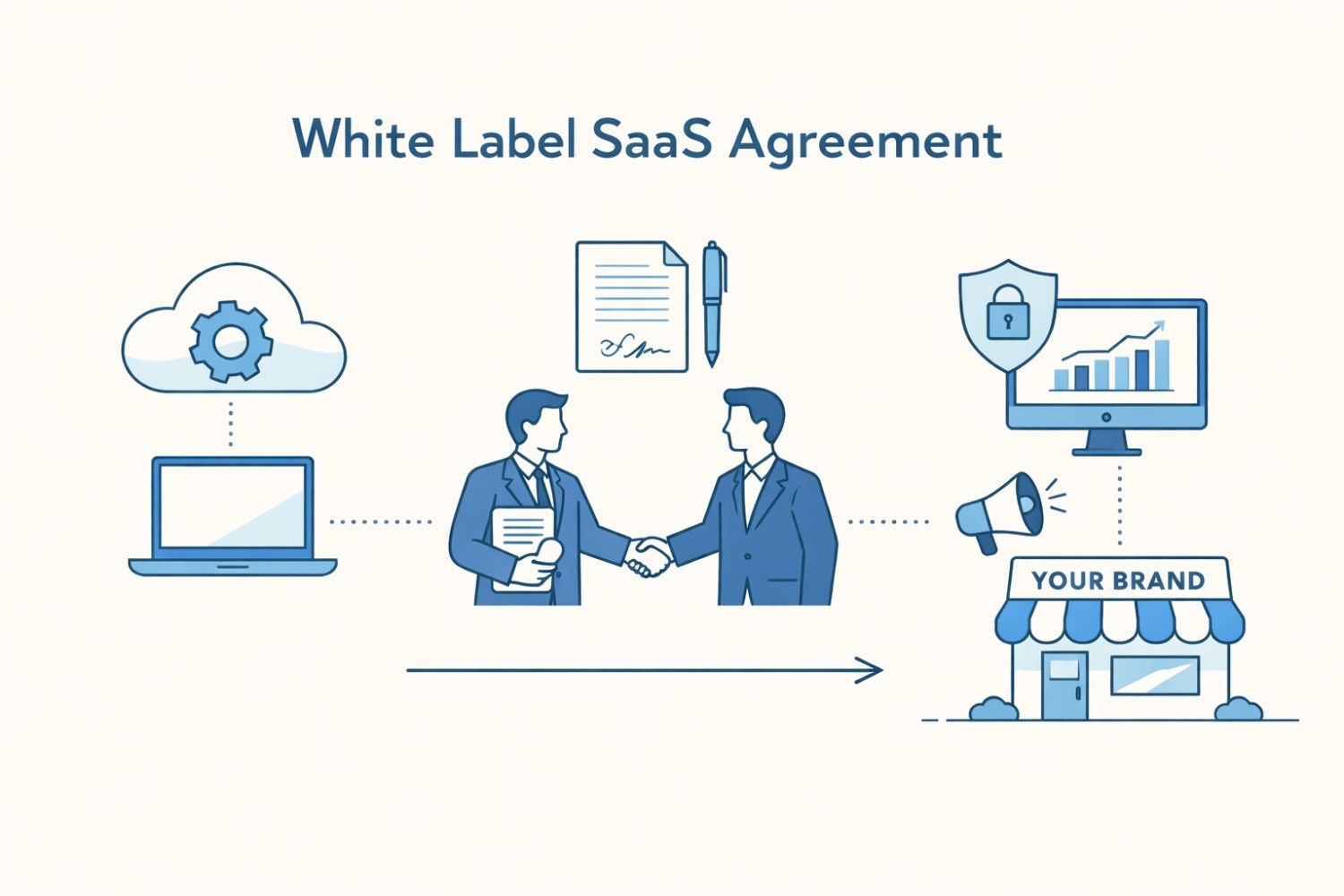
Imagine you are running a tech startup or a marketing agency. You want to offer sophisticated software to your clients, but you don’t have time or budget to build it yourself. A white label SaaS agreement could be the answer. In simple terms, it’s a contract that lets one company license its cloud software to another, which then rebrands it as its own. In other words, you outsource the product development to a provider, while you handle marketing and sales under your brand. Think of it like a private label brand: the supplier remains anonymous, and your company appears as the creator of the software.
White label agreements are common in many industries, from technology to retail because they let companies expand offerings quickly and cost-effectively. They’re also known as private labels or rebranding agreements. In this global guide for 2026, we’ll explain what these contracts cover when you need one and even show sample clauses. You’ll learn the key elements (like licensing, IP, support, and termination) with authoritative sources backing up each point. By the end, you’ll have a clear picture of white label SaaS deals and be better prepared to use them in your business.
What Is a White Label SaaS Agreement?
A white label agreement is fundamentally a partnership contract between two businesses, a software provider and a reseller. The provider owns or creates a software-as-a-service (SaaS) product, and the reseller wants to sell that product under its own brand. Under the agreement, the provider grants the reseller the rights to use, market, and customize the software, while retaining ultimate ownership of the code and technology.
As one legal expert notes, it’s “a contract between a reseller and a manufacturer” (in SaaS terms, vendor and partner) that governs how the product is produced and how the reseller can apply its branding. This mirrors the concept in other sectors: one company makes the product; another sells it under its label. In SaaS, this often means the provider runs and maintains the software on their servers, and the reseller applies to its own logo, design, and product names.
The agreement will define each party’s roles and responsibilities. For example, it spells out which company handles customer support, updates, and technical issues, as well as how revenue is shared. It also clarifies branding rights: how much the reseller can change the look, and what logos or trademarks can be used. In short, this contract sets the rules so that both sides know exactly what “rebranded” means for their product.
White label SaaS deals can take many forms. Sometimes they are simply called “white label partnerships” or even “reseller agreements,” but the key is that one business is effectively selling another software as its own. In practice, this often lets companies quickly add new features or products to their lineup without heavy development costs.
Why Use a White Label SaaS Agreement?
Businesses choose white labeling for several big advantages. Foremost, it saves time and money. You don’t need to hire developers or build a platform from scratch; you leverage an existing solution instead. UpCounsel explains that white-label deals “eliminate the need for extensive product development and manufacturing costs,” so companies can focus on sales and branding. Contracts Counsel similarly notes these agreements are a “convenient and cost-effective way to expand product offerings without developing them from scratch”. In other words, you tap into proven technology at a fraction of the investment.
Another benefit is fast market entry. Because the software already exists, you can launch your branded solution much sooner than if you started from zero. This lets companies test new markets or serve customer needs immediately. It also means you can adapt quickly: if a new trend emerges, you can add that capability by white labeling a ready-made product, instead of delaying development.
White labeling also keeps you focused on branding and customer relationships. Since the technical side is handled by the provider, your team can spend more effort on marketing, sales strategy, and support. As one blog points out, offering a white-label product lets a company present a seamless, branded experience to its customers, reinforcing trust in the brand. This keeps the brand front and center, while the provider stays “in the background.”
Finally, white label agreements support scalability and flexibility. You can add multiple products or services through partners to grow your portfolio. UpCounsel notes that white-label arrangements help businesses scale efficiently by leveraging a partner’s expertise and capacity. For example, a digital agency could quickly add a CRM tool, an AI chatbot, or analytics software to its offerings simply by setting up the right white-label contracts. This flexibility is especially powerful on a global scale; you can plug into products developed in one country and rebrand them for users in another.
In summary, use a white label SaaS agreement when you want to expand your offerings quickly and efficiently without heavy R&D. The agreement lets you tap into specialized expertise and existing products, so you can focus on your market and customers.
When Do You Need a White Label SaaS Agreement?
Not every business needs a white label deal. If you have the time and resources to develop your own SaaS tools, you might not need one. However, white labeling becomes necessary in situations where you want to add new services without building them internally. As UpCounsel observes, “sometimes it is necessary to use white labeling” when a company’s goal is to offer a wide range of products but building them all in-house would be impractical.
Consider some scenarios:
1. A niche reseller or agency needs software for clients. For instance, a recruiting firm might want an applicant-tracking system but doesn’t want to code one. It can white label an existing SaaS that fits the need.
2. A startup or new market entrant needs a turnkey solution. A small company aiming to launch quickly into healthcare or education might white label an established platform instead of starting from zero.
3. A software vendor who has a strong technical product but lacks sales channels may set up white label programs to let others sell its software.
4. Geographical or vertical expansion: If your company wants to enter a region or sector it doesn’t know well, partnering with a local brand who can rebrand and sell your software helps you reach new users.
In all these cases, a formal agreement is vital. It ensures both sides know what to expect.Some research notes, even though retailers often sell others’ products, white-label situations require explicit legal permission in the contract to avoid confusion or IP issues. The contract spells out exactly how the software is delivered, who has what rights, and under which conditions.
Key point: If your business model involves one company “selling another’s software as its own,” then you need a white-label SaaS agreement to document that arrangement. Without it, you could face disputes over branding, quality, or liability later. A clear contract protects both the original developer and the reseller.
Key Elements of a White Label SaaS Agreement
A solid white label SaaS contract covers several essential elements. Below are the main areas it must address, each backed by authoritative guidance:
1. License Grant and Branding Rights: The agreement will specify how the software license is granted. Typically, the provider gives the reseller a non-exclusive, non-transferable license to use and sell the software under the reseller’s brand. It will define the scope (e.g. which modules or features), any customization allowed, and any limits on use. For instance, one sample clause reads: “The Provider grants the Reseller a non-exclusive, non-transferable license to use and market the software under the Reseller’s brand.” Branding and customization provisions detail exactly what visual elements (logos, colors, UI changes) can be altered. A comprehensive contract ensures both sides agree on how the end product will appear to customers.
2. Intellectual Property (IP) and Ownership: This is critical. The agreement must make clear that the provider retains ownership of the underlying software. As one lawyer emphasizes, it should be “absolutely clear that the buyer is not acquiring ownership of the software, only a license to use and sell it under their brand”. In practice, this means all original code, algorithms, and platform rights stay with the provider. Any custom enhancements might be negotiated, but by default the reseller gets no IP rights beyond the license. A sample IP clause often states: “The Provider retains all intellectual property rights to the software, and the Reseller agrees not to dispute these rights.”. This prevents confusion or conflict if the reseller’s business grows and tries to modify or reuse the software later.
3. Customization and Updates: The contract will cover how much the reseller can adapt to the software. It may allow changes in text, graphics, workflows, or APIs to fit the reseller’s needs. It should also cover how updates and new features are handled. For example, will the provider automatically push updates to the white labeled version? Will the reseller have the right to defer or test updates? These details ensure that custom branding elements aren’t overwritten and that the software stays compatible with the provider’s version. While we lack a direct citation here, many white-label contracts include clauses giving the provider final approval over major UI or feature changes to preserve core functionality
4. Fees, Pricing and Revenue Sharing: The agreement spells out how money flows between the parties. Options include fixed license fees, subscription fees per user, markups or commissions on sales, or revenue-sharing percentages. For example, a common model is revenue split, where the reseller adds a margin or keeps a percentage of end-user payments. Industry data suggests resellers often aim for around 30-40% gross margin. One analysis notes typical revenue share ranges of 20-50%. The contract should detail payment terms, amounts, invoicing schedule, currencies, and what happens on late payment. Clarity here avoids money disputes later.
5. Service Levels and Support: Since the provider runs the software, the reseller and its customers rely on the provider’s uptime and support. The agreement usually includes a Service Level Agreement (SLA) or similar terms. It will define uptime guarantees (often 99.9% or better) and what credits or remedies are offered if the service fails to meet them. It also assigns who handles first-level support. For instance, will end-users contact the reseller’s support team or go directly to the provider? Response times, escalation paths, and documentation requirements should be spelled out. According to Zendesk data, half of customers will switch providers after just one poor service experience. So clearly defining support commitments is crucial.
6. Data Ownership, Privacy and Compliance: Modern SaaS collects user data. So, contracts must decide who owns end user data. Often, the reseller owns data about its customers, while the provider may collect aggregated or anonymized usage data. Crucially, the agreement must address data privacy laws. As one expert warns, “if the white-label SaaS handles user data, this section must cover GDPR, HIPAA, or other industry regulations”. In practice, both parties agree to comply with relevant laws, EU GDPR, California’s CCPA, health information rules (HIPAA), or others depending on the region and sector. Any cross-border data transfers or storage locations should be discussed. Failing to handle this can be costly. For example, a healthcare startup once got fined after a breach because its white-label agreement did not ensure HIPAA compliance. It learned the hard way that even if you didn’t code the software, you are still liable for your users’ data. The contract should make sure all parties take adequate security and privacy measures.
7. Liability and Indemnification: Who is responsible if something goes wrong? The contract will limit liabilities and often include indemnity clauses. Typically, the provider agrees to defend the reseller against third-party IP or tech claims related to the software, while the reseller indemnifies the provider for misuse by its customers. Each party usually agrees to indemnify the other for issues arising from their own actions or services. One practical tip: negotiators often limit liabilities so that each side only pays for problems it causes. For instance, if a new feature coded by the provider inadvertently infringes a patent, the provider should cover the legal cost, not the reseller. Mutual indemnification clauses are a common way to allocate these risks fairly.
8. Term and Termination: The contract will set the initial term (often 1-3 years) and conditions for renewal. Importantly, it defines how either party can end the deal. This includes notice periods (commonly 30 to 90 days) and reasons for termination (like breaches or insolvency). The agreement should specify what happens on exit: Can the reseller keep any customer data? Must it stop using the software and return proprietary information? For example, the contract might require the reseller to remove all branding related to the provider and certify deletion of confidential materials. A source emphasizes that good termination clauses spell out obligations like “removing branding, returning data” and “transfer of customers or data”. Without clear exit terms, ending a white-label partnership could cause legal battles or loss of customers.
9. Trademark License: Since the reseller is using the provider’s product under its brand, a trademark license is often needed. The contract should expressly give the reseller permission to use specific trademarks (like the software name) and any logos or trade dress. Daniel Ross Law highlights that you will “need permission to use the brand name or logo” and usually include a well-drafted trademark license in the agreement. This prevents later disputes about brand use.
10. Other Clauses: Finally, standard contract provisions also appear in white label deals: confidentiality (non-disclosure of proprietary info), warranties (usually limited for SaaS), governing law (to choose which jurisdiction’s laws apply), and dispute resolution methods (like arbitration). For example, sample contracts often include a general confidentiality clause: “Both parties agree to maintain the confidentiality of any proprietary information disclosed during the term”. While these are boilerplate, they’re as important in a white-label context as in any business agreement.
Common Clauses Checklist
Key clauses in a white label SaaS agreement typically include:
· License Terms: Scope, exclusivity, sublicensing rights, and territorial limits.
· Intellectual Property: Ownership of software and any custom enhancements, IP indemnities.
· Branding and Customization: Rules for how the software is rebranded and what can/cannot be changed.
· Support and Maintenance: Service levels, support obligations, updates.
· Pricing and Payment: Fees, revenue share or commission, invoicing, and payment terms.
· Data and Privacy: Data ownership, protection obligations, compliance with laws (GDPR, etc.).
· Liability and Indemnity: Limits on damages and which party covers which risks.
· Term and Termination: Duration of contract, renewal process, exit obligations.
· Confidentiality: Protecting each party’s sensitive information.
Each of these categories will have detailed sub clauses in a full agreement. For example, licensing clauses may look like this sample language: “The Provider grants the Reseller a non-exclusive, non-transferable license to use and market the software under the Reseller’s brand.” Another sample clause for IP rights is: “The Provider retains all intellectual property rights to the software, and the Reseller agrees not to dispute these rights.”. These illustrate how contracts turn the points above into binding terms.
Sample Clause Examples
To make this concrete, here are snippets of typical white label clauses:
1. License Clause: “The Provider grants the Reseller a non-exclusive, non-transferable license to use and market the software under the Reseller’s brand.”. This ensures the reseller can legally sell the branded software but cannot assign the license to others.
2. IP Ownership Clause: “The Provider retains all intellectual property rights to the software, and the Reseller agrees not to dispute these rights.”. This confirms the provider keeps ownership and that the reseller won’t later claim the software as its own.
3. Confidentiality Clause: “Both parties agree to maintain the confidentiality of any proprietary information disclosed during the term of this agreement.” This is a standard NDA clause protecting each party’s secret formulas, business plans, etc.
4. Indemnification Clause: “Each party agrees to indemnify and hold harmless the other from any claims arising from their respective services.”. In practice, this means each side will cover legal claims caused by its own actions (e.g., if one party’s actions lead to a lawsuit; that party handles it).
Global and Regulatory Considerations
In today’s interconnected market, white label agreements often have a global dimension. For example, you might partner with a company in another country to reach new markets. White-label deals can help expand global reach: by leveraging partners across regions, you “access new markets, cater to diverse customer needs, and build a global brand presence”. This can greatly boost growth if managed properly.
However, globalization brings challenges. Different countries have different laws around software, data, and trade. The agreement must account for these reasons. For example, labeling rules can vary by industry or region. If your white-label SaaS is offered in the EU, GDPR will apply to any user data, so the contract must ensure compliance. In healthcare or finance, even stricter rules (HIPAA, PCI, etc.) might come into play. One real-life case shows the risks: a health-tech startup white labeled on a telemedicine platform but didn’t verify HIPAA compliance. After a data breach, regulators fined the startup even though they hadn’t built the software themselves. The lesson is clear: you will be held accountable for compliance, so your white-label agreement must include those obligations.
Language and culture can also matter. The contract might need to be translated or dual jurisdiction if the parties are in different countries. Clauses like governing law and dispute resolution become important: you’ll want to decide in advance which country’s courts or arbitration rules apply. In summary, think globally by planning ahead, to ensure your white label terms address international laws, and partner with legal counsel who understands each relevant jurisdiction.
While globalization poses complexity, a well-crafted white-label agreement can unlock worldwide opportunities. It lets your brand be present in new regions without setting up local development teams everywhere. But always do thorough market and regulatory research, and tailor your contract (and possibly localize the software) for each market.
Conclusion
White label SaaS agreements are powerful tools for growth. They let you add software products quickly and brand them as your own, with clear legal rules governing the relationship. By covering license terms, IP rights, branding, support, data compliance, and more, these contracts protect both the software provider and the reseller. As we’ve seen, essential clauses (like licensing language and termination rules) ensure everyone knows who does what and who owns what.
Think of white-label partnerships as strategic alliances: they can expand your global reach and fill gaps in your offerings, but they require careful legal groundwork. Always negotiate terms that match your business needs, and don’t skip expert help. By understanding the ins and outs of white label agreements in 2026, from licensing to indemnities you will be ready to leverage this model confidently. The key is to remain detail-oriented: ask the right questions (Who owns the IP? How do we share revenue? What if something breaks? and ensure the answers are written into your contract.
FAQs
1. What is a white label SaaS agreement in simple terms?
A white label SaaS agreement is a legal contract where a software owner allows another business to sell its cloud-based software under the reseller’s own brand. The reseller appears as the product owner to end customers, while the original developer remains behind the scenes and retains ownership of the software.
2. How is a white label SaaS agreement different from a reseller agreement?
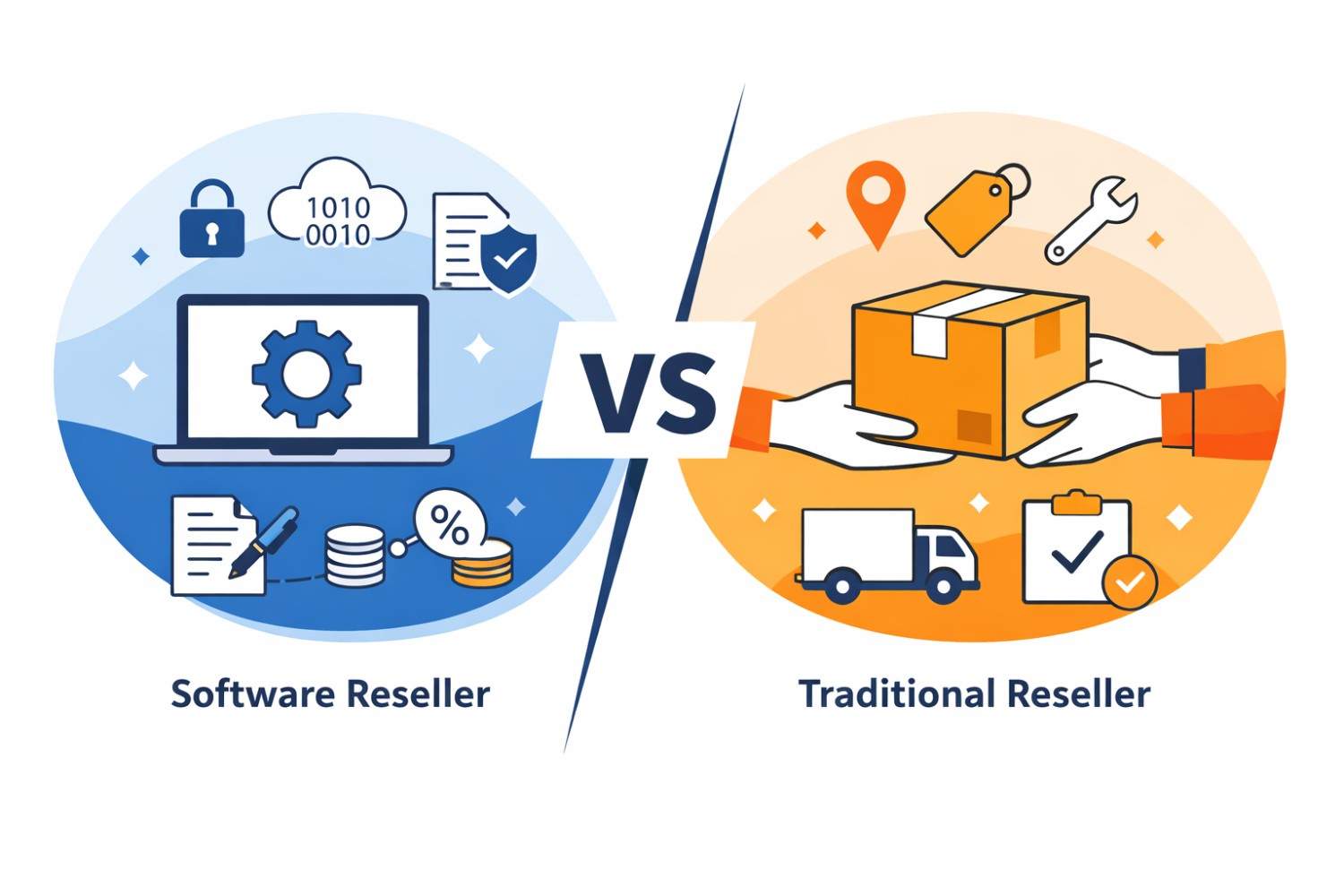
In a white label SaaS agreement, the software is fully rebranded and presented as the reseller’s product. In a standard reseller agreement, the original brand is usually visible. White labeling focuses on brand substitution, while reselling focuses on distribution.
3. Who owns the software in a white label SaaS arrangement?
The original software provider always retains ownership of the underlying code, platform, and intellectual property. The reseller only receives a license to use, market, and sell the software under its brand, subject to the agreement’s terms.
4. Can the reseller modify or customize the white-labeled software?
Yes, but only to the extent permitted by the agreement. Most contracts allow branding changes and limited interface customization. Core functionality, source code, and architecture usually remain under the provider’s control unless otherwise agreed.
5. When should a business consider entering into a white label SaaS agreement?
A business should consider a white label SaaS agreement when it wants to expand its product offerings quickly, enter new markets, or serve customers with software solutions without investing in, in-house development.
RELATED ARTICLES
1. Startup India Registration Explained: Eligibility, Benefits & How Founders Can Apply in 2026
2. How NRIs Can Make a Valid Will for Assets in India (2026 Complete Guide)
ABOUT THE AUTHOR
This blog is authored by Shridansh Tripathi, a second-year law student at the Department of Legal Studies and Research, Barkatullah University, Bhopal.
REVIEWED BY
This blog was reviewed by Prakhar Rai, a seasoned corporate lawyer. He advises extensively on intellectual property, contracts, mergers and acquisitions, and private equity and venture capital. His work also includes data protection and privacy, regulatory and compliance advisory, white-collar crime, technology and startup law, and commercial dispute resolution.
Check out our Template for White Label SaaS Agreement:
https://solvlegal.com/contract-template/white-label-saas-agreement-1/
DISCLAIMER
The information provided in this article is for general educational purposes and does not constitute legal advice. Readers are encouraged to seek professional counsel before acting on any information herein. SolvLegal and the author disclaims any liability arising from reliance on this content.

Related Articles

Leave a Comment

.jpeg "How to Protect an App Idea: Copyright, Design and Patent Explained")