Master Service Agreements for IT Services in India: 10 Clauses Technology Companies Should Review Carefully
Read More
Reseller Agreements Explained: How Software Reseller Agreements Differ From Traditional Reseller Contracts (2026 Global Guide)
By the SolvLegal Team
Published on: Jan. 25, 2026, 12:47 p.m.
Quick Answer
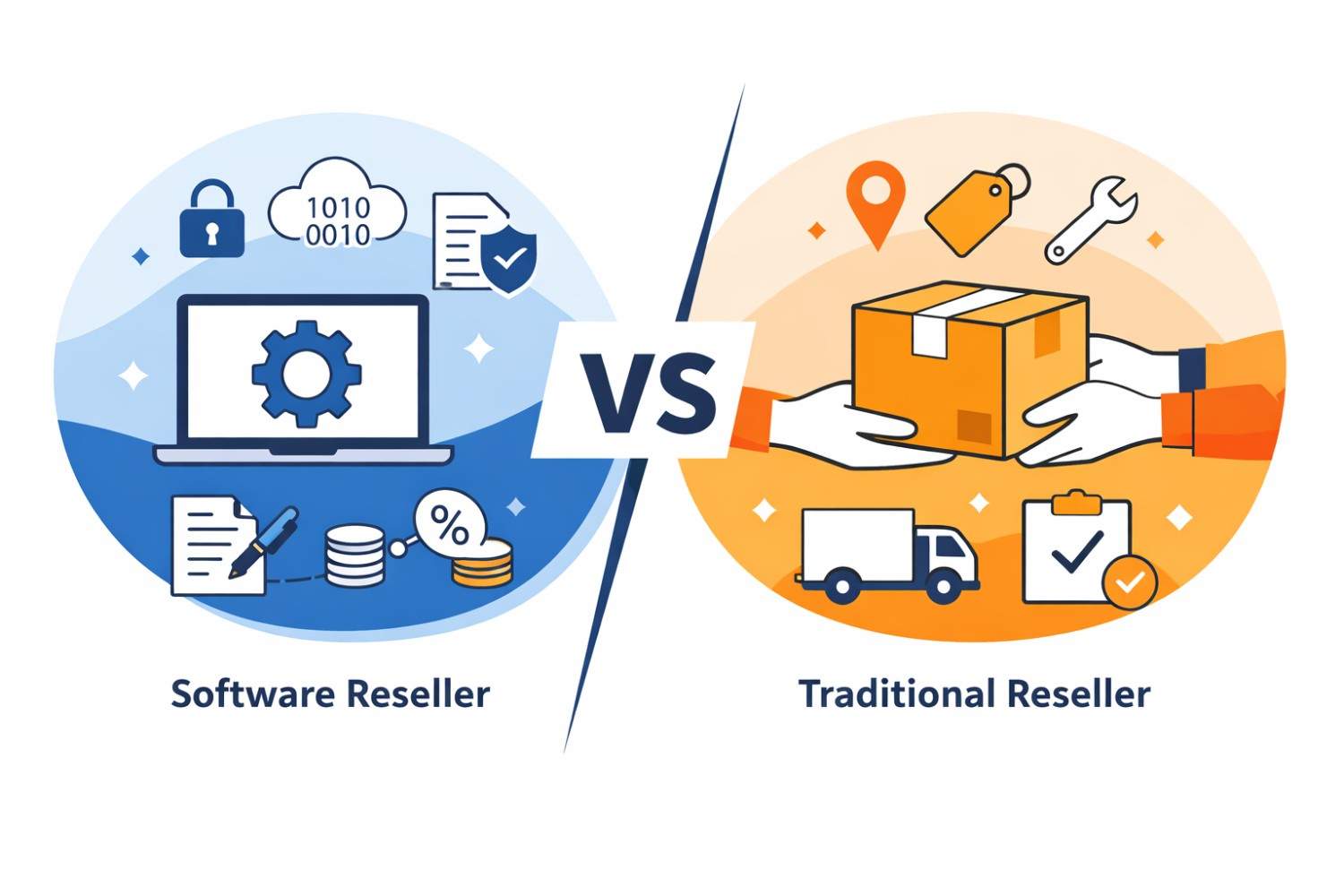
Reseller agreements are often treated as standard commercial contracts, but that assumption breaks down when software enters the picture. This guide explains what reseller agreements actually do, why software reseller agreements are legally different from traditional reseller contracts, and how those differences affect ownership, revenue, compliance, and risk in 2026.
You’ll see how software reseller arrangements revolve around licensing rather than sale, why intellectual property and usage restrictions sit at the centre of these contracts, and how obligations around data protection, updates, and compliance change the reseller’s role. The guide also compares how these agreements operate across key jurisdictions, including India, the United States, the United Kingdom, the European Union, and the UAE.
By the end, you should be able to tell whether your business needs a traditional reseller contract, a software reseller agreement, or something else entirely, and understand the legal consequences of getting that choice wrong.
What a Reseller Agreement Is
At its core, a reseller agreement is a commercial contract through which one party authorises another to market and sell its products to end customers. The original supplier or manufacturer remains responsible for creating the product, while the reseller acts as an independent sales channel. The agreement defines the scope of this relationship, including how the reseller can sell, where it can sell, and under what conditions revenue is shared.
Legally, reseller agreements sit at the intersection of contract law, commercial distribution, and competition principles. They are not employment arrangements and they are not agency relationships unless explicitly structured that way. A reseller typically buys products at a discounted price or earns a margin or commission, bearing its own commercial risk. This distinction matters because it affects liability, tax treatment, and regulatory compliance.
Traditional reseller agreements evolved around tangible goods. In those models, the reseller purchases goods, acquires title, and resells them to customers. The contract focuses on pricing, delivery, territory, warranties, and returns. Ownership of the product passes along the supply chain, and the reseller’s obligations largely end once the sale is complete. Understanding this baseline is important because many businesses incorrectly assume that software can be resold in the same way as physical goods.
Traditional Reseller Contracts: How They Usually Work
Traditional reseller contracts are built around the resale of physical or tangible goods. The legal and commercial logic behind these contracts assumes that products can be owned, transferred, and resold without ongoing control from the original supplier. Once the reseller purchases the goods, title usually passes to them, allowing resale to end customers with relatively limited post-sale involvement from the manufacturer.
These contracts typically focus on clear commercial mechanics. Pricing structures are defined upfront, either through wholesale rates or fixed margins. Territories and channels are specified to avoid overlap or competition between resellers. Delivery terms, risk transfer, and warranties are clearly allocated, reflecting the fact that physical goods can be inspected, returned, or replaced. Liability is often tied to defects in goods rather than ongoing performance.
Another defining feature of traditional reseller arrangements is finality of sale. After the reseller sells the product, the manufacturer’s role is largely complete. There is no continuing relationship with the end customer, no need for updates or maintenance, and limited regulatory oversight beyond product safety and consumer protection laws. Disputes tend to revolve around supply failures, defective goods, or pricing disagreements, rather than usage rights or compliance.
This structure works well for goods-based businesses because ownership can move freely through the distribution chain. The problem arises when the same contractual framework is applied to software. Software does not operate on ownership in the same way, and attempting to force it into a traditional reseller model creates legal and commercial friction.
Software Reseller Agreements: Why They Are Fundamentally Different
Software reseller agreements look similar to traditional reseller contracts on the surface, but legally they operate on a very different foundation. The most important shift is that software is not sold in the same sense as physical goods. Instead of ownership transferring down the chain, what is transferred is a limited right to use the software, controlled through licences.
In a software reseller arrangement, the original developer or licensor usually retains full ownership of the intellectual property. The reseller is authorised to market the software and, in many cases, to grant end users a licence on the licensor’s behalf. This means the reseller is not reselling a product it owns; it is facilitating access to software under tightly defined terms. That single distinction changes the entire risk and compliance profile of the contract.
Another major difference lies in control over usage and distribution. Software licences often impose restrictions on how the product can be used, modified, sublicensed, or deployed. These restrictions must flow consistently from the licensor to the reseller and then to the end user. If this chain breaks, the licensor’s IP can be exposed, and the reseller may unintentionally create liability by overstepping the scope of its authority.
Software reseller agreements also carry ongoing obligations that traditional reseller contracts rarely involve. Updates, patches, bug fixes, cybersecurity responsibilities, and service availability all become relevant. In SaaS models especially, the relationship with the end user does not end at the point of sale. This raises questions about who provides support, who handles downtime, and who bears responsibility if the software fails to perform as expected. Data protection and regulatory compliance add another layer of complexity. Software often processes personal or business data, which means reseller agreements must address compliance with laws such as GDPR, sector-specific regulations, and cross-border data transfer rules. Traditional reseller contracts rarely deal with this level of post-sale legal exposure.
Pricing structures also differ. Instead of one-time margins on goods, software reseller agreements commonly use subscription models, usage-based pricing, or revenue sharing. This makes reporting, audits, and transparency central contractual issues, rather than afterthoughts. These differences explain why copying a traditional reseller contract for software distribution is risky. Software reseller agreements are not just commercial documents; they are licensing and compliance instruments.
Key Clauses Founders Must Never Ignore in Software Reseller Agreements
· Appointment and scope of authority: This clause must clearly state what the reseller is allowed to do. Whether the reseller can only market the software, conclude end-user licences, or also provide onboarding and support needs to be unambiguous. Vague scope language often leads to unauthorised sublicensing and IP exposure.
· Licence grant and usage restrictions: This is the heart of a software reseller agreement. It should clearly define what rights are granted over the software and, equally importantly, what is prohibited. Permissions around sublicensing, modification, bundling, or demonstrations must be tightly controlled to avoid misuse of the software.
· Pricing model, revenue share, and reporting: Software reseller agreements usually rely on subscriptions, usage-based pricing, or revenue sharing rather than one-time margins. This makes accurate reporting obligations essential. Audit rights are critical to ensure transparency and prevent revenue leakage.
· Intellectual property ownership and branding rights: The agreement must clearly confirm that all IP in the software remains with the licensor. Any right to use trademarks, logos, or branding should be limited strictly to marketing purposes. Poorly drafted branding clauses can blur ownership boundaries.
· Data protection and confidentiality obligations: If the software processes personal or regulated data, the reseller’s responsibilities under data protection laws must be clearly defined. This includes data handling, breach notification, and cooperation with compliance requirements. Treating this as boilerplate is risky in modern software deals.
· Support, updates, and maintenance responsibilities: The contract should clarify who provides customer support, who handles updates and patches, and how service failures are managed. In SaaS models, these ongoing obligations are central to customer relationships and liability allocation.
· Termination and post-termination rights: Termination clauses should address what happens to existing customers, active subscriptions, and stored data. Sell-off rights, transition assistance, and data return or deletion obligations determine whether termination is smooth or disruptive.
These clauses collectively define control, compliance, and revenue certainty in software reseller arrangements. Missing or loosely drafted provisions here often cause problems only after the business has scaled, when fixing them becomes expensive and difficult.
How Software Reseller Agreements Interact With Other Commercial Contracts
Software reseller agreements rarely operate in isolation. In most businesses, they sit alongside multiple other contracts, and problems arise when these documents are drafted independently without considering how they overlap. Understanding these interactions is essential to avoid conflicting obligations and unintended legal exposure.
One common overlap is with end-user licence agreements (EULAs). In software resale, the reseller often acts as the commercial bridge between the licensor and the customer, but the EULA usually governs the actual use of the software. If the reseller agreement authorises conduct that the EULA prohibits, the licensor may face compliance issues while the reseller assumes it has rights beyond what it actually has. Alignment between these documents is critical.
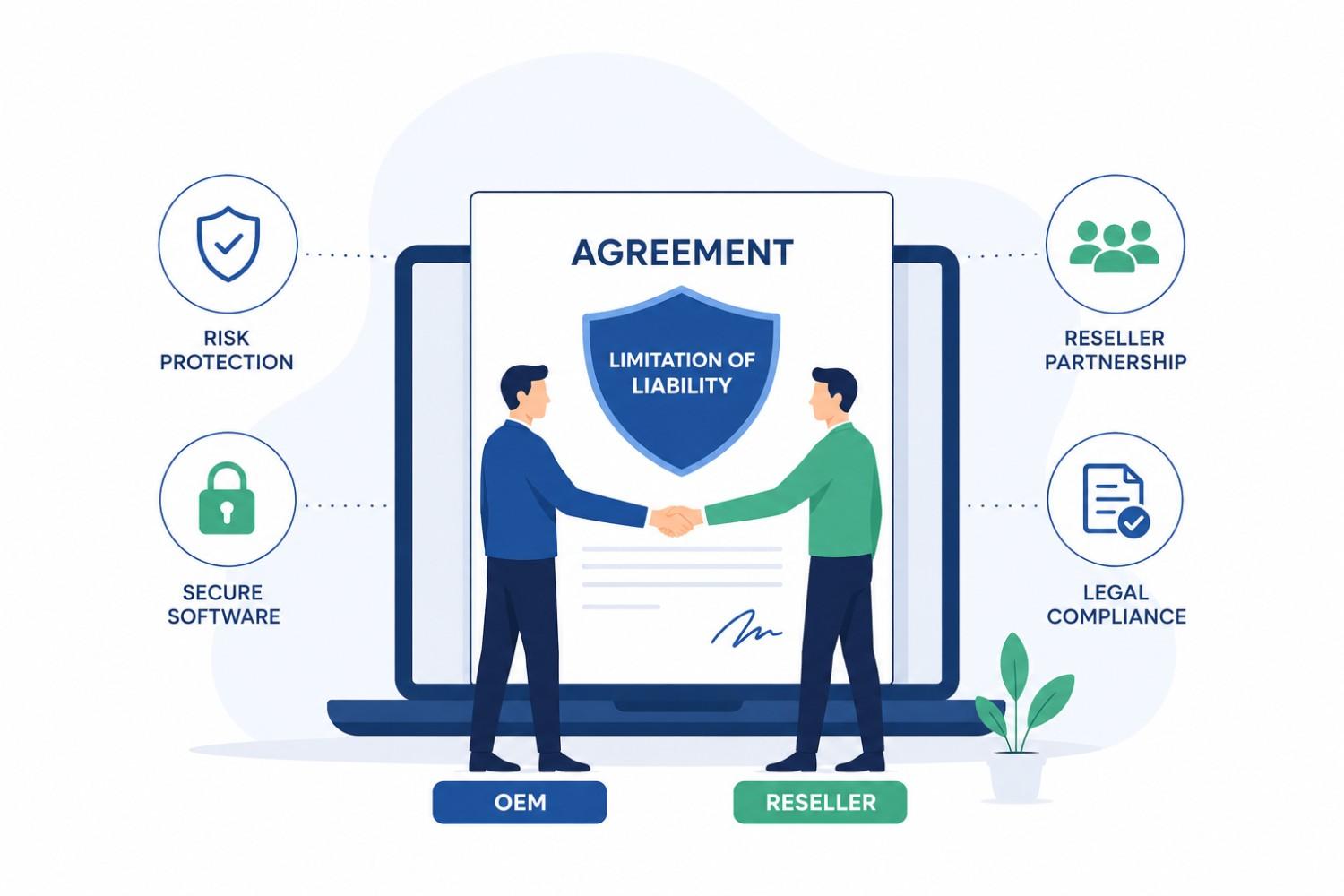
Software reseller agreements also intersect with distribution and OEM agreements. In some models, a reseller may also bundle software with hardware or other services. Without careful drafting, this can blur whether the reseller is reselling, sublicensing, or acting as an OEM partner. Each structure carries different IP, liability, and regulatory implications, especially across jurisdictions.
Another frequent point of interaction is with service and support agreements. If the reseller provides implementation, training, or first-line support, those obligations should be clearly separated from the licensing relationship. Otherwise, service failures can spill into licensing disputes, increasing exposure for both parties.
Finally, there is often tension between reseller agreements and data protection or compliance contracts. Where software processes personal or regulated data, the reseller’s role under data protection laws must align with how responsibilities are allocated in licensing and service documents. Misalignment here can trigger regulatory risk even if the reseller agreement looks commercially sound.
The key takeaway is that software reseller agreements should be drafted as part of a contract ecosystem, not as standalone documents. The next section looks at how this complexity plays out across jurisdictions and why global considerations matter in software resale.
Global Considerations: How Software Reseller Agreements Vary Across Jurisdictions
Software reseller agreements are heavily shaped by local contract law, IP regimes, competition rules, and data protection frameworks. A structure that works cleanly in one jurisdiction can create compliance or enforceability issues in another. For businesses operating internationally, understanding these variations is essential.
In India, software reseller agreements are primarily governed by general contract law principles under the Indian Contract Act, 1872, combined with intellectual property law and the Information Technology Act, 2000. Software is treated as licensed IP rather than goods, which means reseller agreements must clearly reflect licensing boundaries. Indian courts place great weight on contractual intent, so ambiguous reseller–licensee language can create uncertainty about rights and liabilities. Data protection obligations, particularly with the evolving privacy framework, also increasingly influence how reseller roles are defined.
The United States takes a more fragmented approach because contract and commercial law vary by state. Traditional goods-based resale often falls under the Uniform Commercial Code (UCC), but software distribution is usually treated as a licensing arrangement rather than a sale of goods. This distinction affects warranty disclaimers, liability allocation, and termination rights. US software reseller agreements also tend to include robust audit, compliance, and limitation of liability clauses, reflecting the higher litigation risk in the market.
In the United Kingdom and the European Union, software reseller agreements must navigate a tighter regulatory environment. Software licensing is well established, but reseller arrangements are scrutinised under competition law and consumer protection rules. In the EU, digital content and services regulations influence how software can be marketed and supported. Data protection under GDPR adds another layer, requiring careful allocation of responsibilities between licensors and resellers, especially where personal data flows across borders.
The United Arab Emirates presents a distinct model, particularly within financial free zones such as the DIFC and ADGM. These jurisdictions offer modern contract and commercial frameworks aligned with common law principles, making them attractive for software and SaaS distribution. However, outside the free zones, commercial agency laws can apply if a reseller arrangement is structured poorly, potentially granting statutory protections to resellers that licensors did not intend. This makes jurisdiction-specific structuring especially important in the UAE.
Common Pitfalls in Software Reseller Agreements, and How Founders Lose Control
Many problems in software reseller relationships do not come from bad faith. They arise because businesses reuse traditional reseller logic in a licensing-driven environment. These mistakes often stay hidden until revenue scales, a dispute arises, or a regulator steps in.
One of the most common pitfalls is failing to clearly distinguish resale from sublicensing. In software, the reseller is rarely selling a product it owns. If the agreement does not precisely define whether the reseller can grant licences to end users, founders may unintentionally allow sublicensing beyond their control. This can dilute IP rights and create downstream compliance issues that are difficult to unwind.
Another frequent issue is overbroad or unclear territorial and channel rights. Software licensors often need tight control over where and how their products are distributed due to pricing strategies, regulatory requirements, or data laws. Vague territory clauses can lead to unauthorised cross-border sales, undercutting pricing and triggering regulatory exposure.
Founders also underestimate the risk of weak audit and reporting mechanisms. Subscription-based and usage-based pricing models depend on accurate data. Without strong reporting obligations and audit rights, licensors have no reliable way to verify revenue or licence compliance. This can quietly erode margins long before the issue is detected.
A related pitfall is misalignment with end-user agreements. If the reseller agreement allows conduct that the EULA restricts, the licensor may be exposed to breach claims even though the reseller acted under apparent authority. This conflict often surfaces only after customer disputes or enforcement actions.
Finally, many agreements fail to plan properly for termination and transition. Founders focus on onboarding resellers but overlook what happens when the relationship ends. Without clear post-termination rules for customer access, data handling, and ongoing subscriptions, termination can disrupt customers and damage brand trust.
These pitfalls highlight why software reseller agreements require deliberate, specialised drafting. Treating them as standard commercial contracts often results in loss of control, revenue leakage, or regulatory risk. The next section explains how legal support can help businesses structure reseller arrangements that scale safely.
How SolvLegal Helps With Software Reseller Agreements
SolvLegal helps businesses structure software reseller agreements that protect IP, revenue, and compliance from day one. The focus is on drafting clear licence terms, defining reseller authority, and aligning contracts with how the software is actually sold and used.
For cross-border or scaling businesses, SolvLegal also ensures reseller arrangements reflect jurisdiction-specific risks, so growth does not come at the cost of legal uncertainty.
Conclusion
As software businesses scale in 2026, reseller agreements increasingly determine how growth happens and how much control the company retains while growing. What looks like a routine sales contract is, in reality, a licensing framework that governs intellectual property, customer relationships, data handling, and revenue integrity. Treating it like a traditional reseller contract built for physical goods is where most businesses go wrong.
The key difference is simple but decisive. Traditional reseller contracts move ownership down the chain. Software reseller agreements do not. They distribute access while ownership stays central. Every clause around licensing, sublicensing, audits, data protection, and termination reflects that reality. When those clauses are missing or loosely drafted, businesses do not just face legal risk, they lose strategic leverage over pricing, compliance, and customer trust.
Founders often discover these issues late, when a reseller relationship has already expanded across markets or become critical to revenue. At that stage, fixing contract design is harder, slower, and more expensive. The smarter approach is to recognise software reseller agreements as core infrastructure for scale, not administrative paperwork.
In a global, subscription-driven software economy, clarity beats speed. Businesses that invest early in properly structured reseller agreements protect their IP, preserve flexibility, and scale with confidence. Those that don’t often end up renegotiating under pressure. In software, the contract you sign today quietly decides how much control you keep tomorrow.
Frequently Asked Questions (FAQs)
1. How is a software reseller agreement different from a distributor agreement?
A software reseller agreement usually authorises the reseller to market and sell licences to end users, while ownership of the software and IP remains with the licensor. A distributor agreement, especially in traditional goods, often involves bulk purchasing, inventory risk, and greater commercial independence. In software, distributors may also exist, but the key distinction is that software distribution is still licence-driven, not ownership-driven, which keeps tighter control with the original software company.
2. Can a software reseller modify or customise the software for customers?
Only if the agreement expressly allows it. By default, resellers do not have the right to modify, adapt, or create derivative works of software. Allowing customisation without clear boundaries can dilute IP rights and create support and liability issues. If customisation is permitted, the agreement should clearly define scope, ownership of modifications, and responsibility for maintenance.
3. Who is responsible for customer support in a software reseller model?
This depends entirely on how the agreement is structured. Some models place first-line support on the reseller, with escalation to the licensor. Others keep all support with the software company. Ambiguity here is risky. If customers do not know who is responsible for outages or bugs, disputes and reputational damage follow quickly.
4. What happens to existing customers if a software reseller agreement is terminated?
This is one of the most critical issues in software reseller agreements. The contract should clearly address whether existing licences continue, who services customers post-termination, and whether the reseller has any sell-off or transition rights. Without clear post-termination provisions, termination can disrupt customers and expose both parties to legal and commercial fallout.
5. Are software reseller agreements enforceable across borders?
Yes, but enforceability depends on governing law, jurisdiction clauses, and compliance with local regulations. Cross-border software reseller agreements must account for IP enforcement, data protection laws, and competition rules in each territory. A clause that works domestically may create compliance issues internationally if not adapted properly.
6. Should startups use standard templates for software reseller agreements?
Standard templates are a starting point at best. Software reseller agreements are highly sensitive to business model, pricing structure, data flows, and geography. Using a generic template often leaves gaps around licensing scope, audit rights, data protection, and termination. For startups planning to scale, these gaps tend to surface at the worst possible time, during fundraising, audits, or expansion.
Related articles:
1. Term Sheets & Shareholders’ Agreements 2025: Legal Clauses Indian Founders Often Overlook
2. Outsourcing Software Development Abroad? Legal Clauses Every Business Must Know (2025 Global Guide)
About the author: Kunal Singh is a second-year B.Sc. LL.B. (Hons.) student at National Forensic Sciences University, Gandhinagar.
Reviewed by: This blog was reviewed by Yashvardhan Singh, a legal professional focusing on legal research, contract analysis, and regulatory compliance. He works closely with corporate and technology-driven legal frameworks, with particular exposure to data protection, commercial documentation, and legal process optimisation. His work supports businesses in strengthening compliance structures and ensuring legally sound operations.
Check out our Software Reseller Agreement Template:
https://solvlegal.com/contract-template/software-reseller-agreement/
Disclaimer
The information provided in this article is for general educational purposes and does not constitute a legal advice. Readers are encouraged to seek professional counsel before acting on any information herein. SolvLegal and the author disclaim any liability arising from reliance on this content.

Related Articles
Leave a Comment