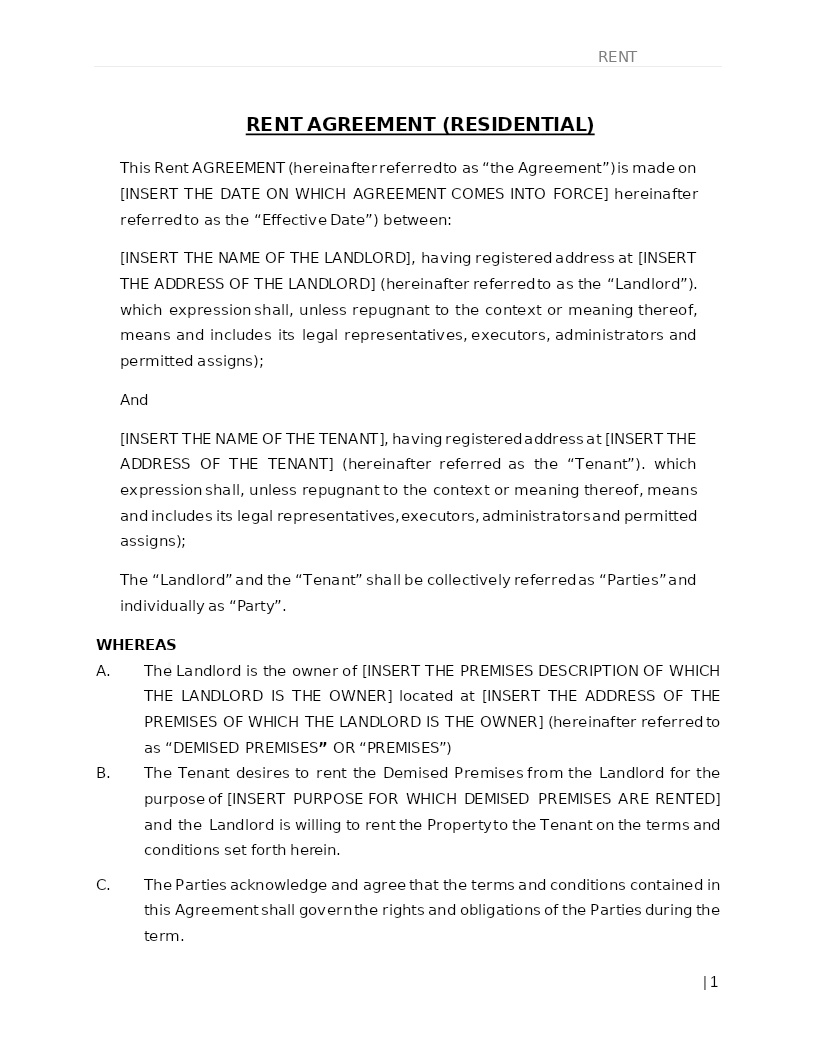
RENT AGREEMENT (RESIDENTIAL)
How does it work?
1. Choose this template
Start by clicking on "Fill out the template"
2. Complete the document
Answer a few questions and your document is created automatically.
3. Save - Print
Your document is ready! You will receive it in Word and PDF formats. You will be able to modify it.
Residential Rent Agreement (Landlord–Tenant Agreement) – Lawyer-Drafted & Legally Compliant
Renting out or taking a home on rent usually feels simple, until something goes wrong. Many people also don’t realize that rent agreement rules differ across countries and even cities, which can affect enforceability.
A security deposit is not returned.
A repair turns into an argument.
A tenant refuses to vacate.
A landlord asks for early termination.
At that point, the real question is no longer “Do we have a rent agreement?”
It becomes “Does what we signed actually protect us?”
A Residential Rent Agreement exists to prevent these situations by clearly recording what both parties agreed to, in writing, before possession of the property changes hands. This agreement is professionally drafted to cover the issues that commonly arise during a tenancy, not just the obvious ones.
Its structure follows the same clarity-first, responsibility-driven approach used in well-drafted commercial contracts, where roles and risks are defined upfront rather than argued about later.
What Is a Residential Rent Agreement and Why Do You Need One?
A Residential Rent Agreement is a legally binding contract between a landlord and a tenant for the use of a residential property. It sets out the terms of the tenancy so both sides know exactly where they stand.
Many people assume that creating a rent agreement simply involves filling in basic details such as names, rent, and duration. In reality, the structure of the agreement, the clauses included, and how it is executed often determine whether it will actually be enforceable if a dispute arises.
To help landlords and tenants understand this process, we have explained the practical steps, common mistakes, and legal considerations in our guide on how to create a rental agreement. Reading this can be useful if you want clarity on what goes into a legally sound rent agreement before using a template.
A typical residential rent agreement records:
- The rent amount and method of payment
- The security deposit and conditions for deduction or refund
- The duration of the tenancy and renewal terms
- Maintenance and repair responsibilities
- Permitted use of the property and occupancy limits
- Notice periods and termination rights
- Dispute resolution and governing law
Clear drafting matters because most tenancy disputes turn on written terms rather than verbal understanding.
Legal Recognition of Residential Rent Agreements
This template is drafted to be adaptable across jurisdictions, but local legal requirements may require modification.
Residential Rent Agreements are generally legally recognised and enforced under tenancy and rental laws in most jurisdictions, provided they comply with applicable legal requirements.
In practice, this generally means:
- India: Governed by state-specific Rent Control Acts and tenancy laws. Written agreements are legally enforceable and may require registration if they exceed a prescribed duration.
- United States: Enforced under state landlord–tenant laws. Written lease agreements clearly defining rights and obligations are legally binding.
- United Kingdom & European Union: Regulated under housing and tenancy laws, including Assured Shorthold Tenancy (AST) frameworks in the UK.
- United Arab Emirates (UAE): Enforceable when registered with the relevant local authority and compliant with local tenancy regulations.
- Australia & Canada: Governed by state and provincial residential tenancy laws, with strict rules on deposits, disclosures, and termination.
Courts generally assess enforceability based on clarity, fairness, and compliance with local law, because tenancy disputes often rely heavily on written evidence rather than oral arrangements.
Is a Residential Rent Agreement Legally Binding?
Yes. When properly executed and registered where required, a Residential Rent Agreement is legally binding and enforceable under applicable tenancy laws.
However, enforceability depends on factors such as proper execution, compliance with mandatory legal provisions, and whether the terms are consistent with local tenant-protection rules. No agreement can override statutory rights provided by law.
Why You Should Consult a Lawyer Before Using This Template
Tenancy laws are not uniform. Rules relating to security deposits, rent increases, eviction, maintenance obligations, and notice periods can vary significantly depending on the location of the property and the nature of the tenancy.
While this Residential Rent Agreement is professionally drafted, legal review is especially recommended where:
- The rent or security deposit is substantial
- The tenancy is intended to be long-term
- Lock-in periods or early termination clauses are involved
- The property is rented by or to an NRI
NRIs renting out residential property in India often face additional legal and compliance considerations, such as documentation requirements, tax implications, and local regulatory formalities. These aspects are explained in detail in our guide on how NRIs can rent out property in India and should be carefully considered before finalizing a rent agreement.
A lawyer can help ensure that the agreement reflects local legal requirements, addresses jurisdiction-specific risks, and aligns with the practical realities of the tenancy.
At SolvLegal, our legal team can review and customize this agreement within 48 hours to ensure it is legally compliant, enforceable, and suited to your specific rental arrangement.
Who Should Use This Template
This Residential Rent Agreement is suitable for:
- Residential landlords and property owners
- Tenants entering into a new rental arrangement
- Property managers and housing societies
- Individuals renting apartments, houses, or independent floors
- NRIs leasing residential property in India
It is designed to provide a practical starting point for common residential tenancies while remaining legally sound.
How to Download This Template
- Click Fill Out the Template
- Enter landlord and tenant details
- Add property information, rent, and security deposit
- Select the tenancy period and governing law
- Download the agreement in Word or PDF format
- Execute and register the agreement if required under local law
Frequently Asked Questions (FAQs)
What happens if there is no written rent agreement?
In the absence of a written agreement, the tenancy is governed by default legal provisions. These may not reflect what the parties actually intended and often leave limited room to enforce specific terms.
Can rent be increased during the tenancy?
Rent can be increased if the agreement permits it and the increase complies with applicable rent control or tenancy laws.
Who is responsible for maintenance and repairs?
This depends on what the agreement provides and what local law requires. Clear drafting helps prevent disputes over day-to-day and structural maintenance.
Can a tenant sublet the property?
Subletting is only permitted if expressly allowed under the agreement and permitted by local tenancy laws.
Related Templates You May Need
• Building Maintenance Agreement
• Property Management Agreement
