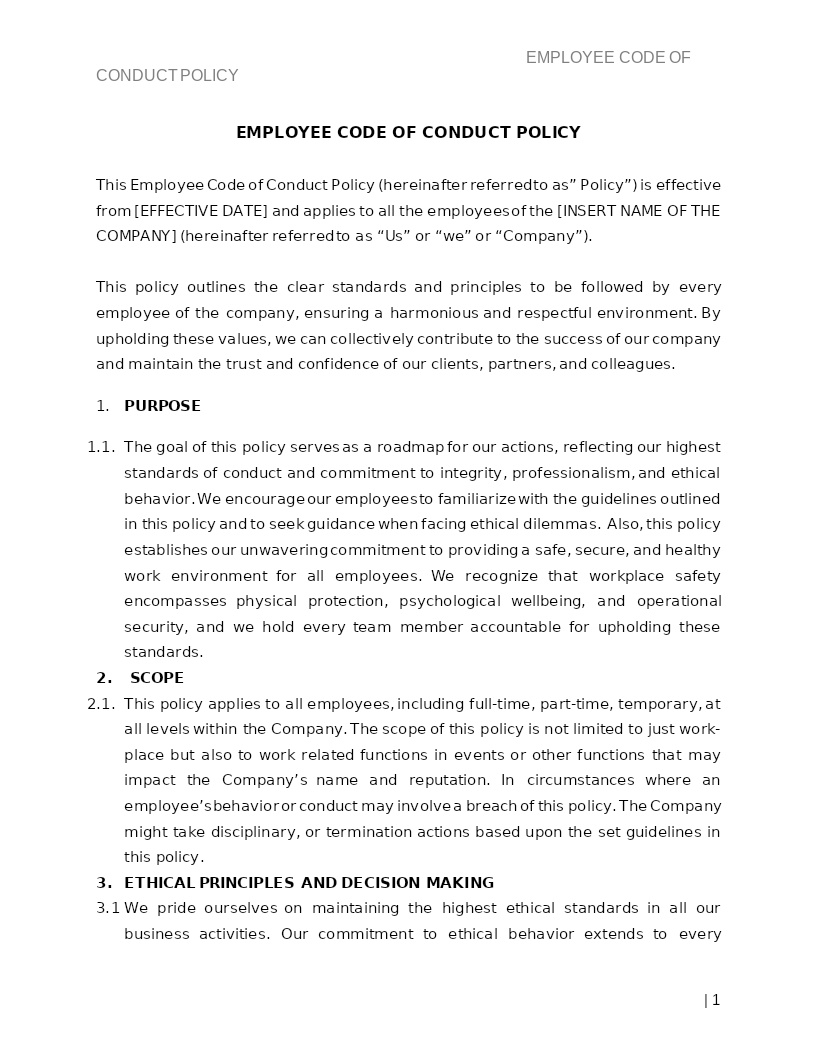
EMPLOYEE CODE OF CONDUCT POLICY
How does it work?
1. Choose this template
Start by clicking on "Fill out the template"
2. Complete the document
Answer a few questions and your document is created automatically.
3. Save - Print
Your document is ready! You will receive it in Word and PDF formats. You will be able to modify it.
Lawyer-Drafted | Workplace Compliant | Customizable in Word/PDF
Before workplace conflicts, compliance issues, or reputational risks arise, set clear expectations, promote ethical behaviour, and maintain a respectful work environment with a professionally drafted Employee Code of Conduct.
What Is an Employee Code of Conduct?
An Employee Code of Conduct is a formal policy document that defines the standards of behaviour, ethics, and professional conduct expected from employees within an organisation. It outlines acceptable workplace practices, compliance obligations, conflict-of-interest rules, data protection standards, anti-harassment principles, and disciplinary procedures. A well-drafted Code of Conduct helps create a transparent workplace culture, ensures legal compliance, and provides a clear framework for addressing misconduct.
Legal Recognition and Applicability of Employee Codes of Conduct
Employee Codes of Conduct are widely recognised and enforceable as internal workplace policies when implemented in accordance with applicable employment and labour laws.
Here’s how major regions treat them:
- India: Governed by labour laws, industrial employment regulations, and company policies. Codes of Conduct are enforceable when properly communicated and incorporated into employment terms.
- United States: Recognised under employment law as internal corporate policies, supporting disciplinary actions when consistently applied.
- United Kingdom & European Union (EU): Enforced as part of workplace policies, with emphasis on fairness, data protection, and anti-discrimination laws.
- United Arab Emirates (UAE): Applicable under labour regulations and company compliance frameworks, particularly for ethical conduct and workplace discipline.
- Australia & Canada: Recognised under employment standards and workplace regulations, with strong focus on health, safety, and anti-harassment obligations.
Across jurisdictions, clarity, fair implementation, and alignment with employment laws are essential for enforceability.
Why You Should Consult a Lawyer Before Using This Template
While this Employee Code of Conduct is professionally drafted, workplace policies must align with local labour laws, organisational structure, and industry-specific compliance requirements. A lawyer can customise provisions relating to disciplinary action, confidentiality, data protection, social media use, whistleblower reporting, conflict of interest, and workplace safety.
At SolvLegal, our in-house legal team and partnered lawyers can review and tailor this Code of Conduct within 48 hours, ensuring it is legally compliant, internally enforceable, and aligned with your organisational values.
Who Should Use This Template
• Companies and startups of all sizes
• HR teams and compliance departments
• Employers establishing workplace policies
• Organisations onboarding new employees
• Businesses updating internal compliance frameworks
How to Download This Template
Click on Fill Out the Template
Enter company and policy details
Define employee obligations and conduct standards
Specify disciplinary and reporting procedures
Select applicable governing law
Download the policy in Word or PDF format
Frequently Asked Questions (FAQs)
1. Is an Employee Code of Conduct legally binding?
It is enforceable as an internal policy when properly communicated and acknowledged by employees.
2. Should employees formally acknowledge the Code of Conduct?
Yes. Written acknowledgment strengthens enforceability and compliance.
3. Can disciplinary action be taken for violations?
Yes. Disciplinary measures may be applied in accordance with the policy and applicable labour laws.
4. Does this Code cover anti-harassment and discrimination?
Yes. It includes provisions addressing respectful workplace behaviour and anti-harassment principles.
5. Can the Code of Conduct be updated?
Yes. Employers may revise the policy, subject to legal compliance and proper communication.
6. What happens if a company does not have a Code of Conduct?
Handling misconduct becomes inconsistent and legally risky, increasing exposure to disputes.
Related Templates You May Need
• Trade Secret Protection Policy
• Employee code of conduct Policy
