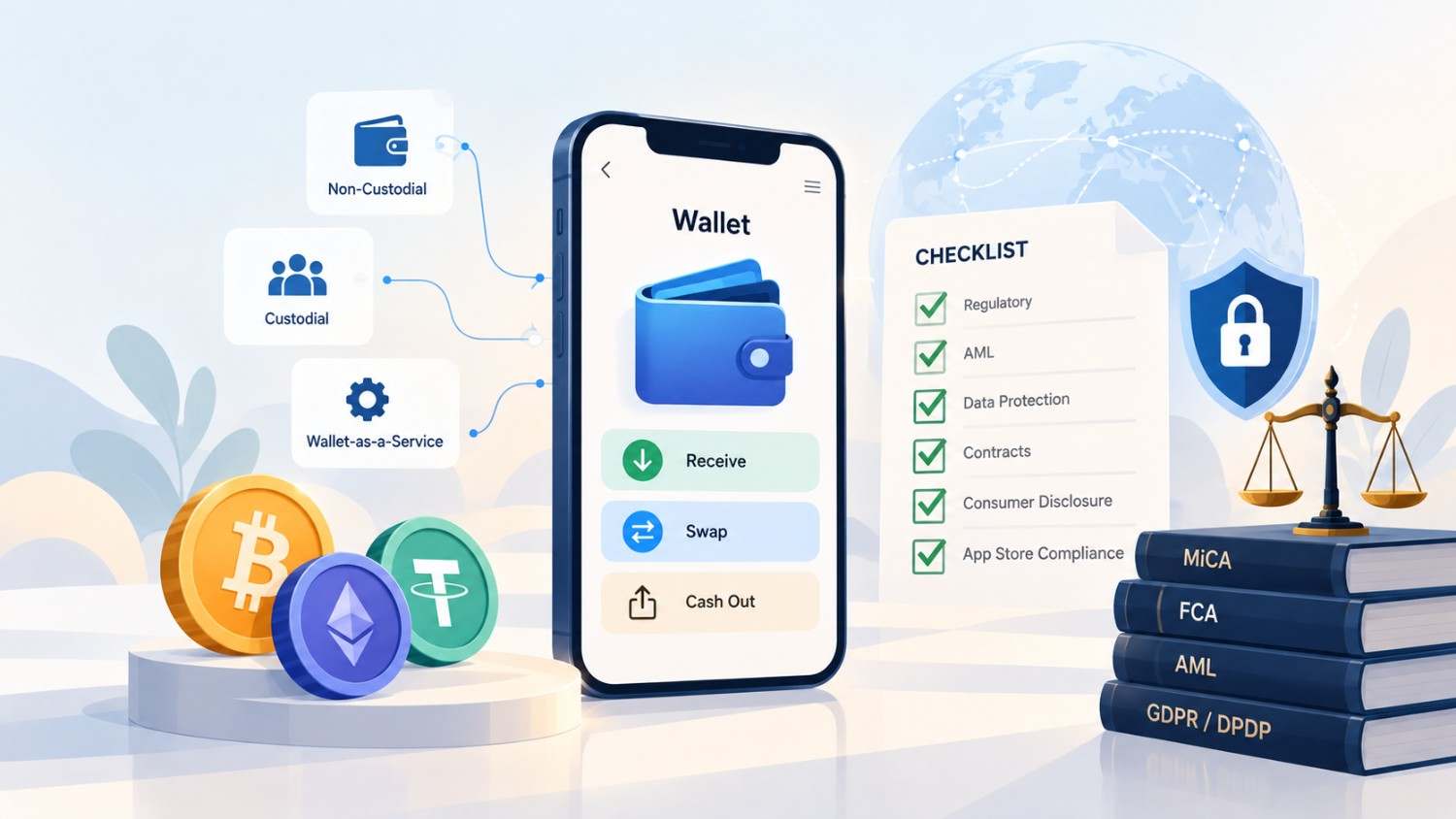
Launching a Web3 or dApp Product: Legal, Regulatory & Compliance Checklist for Founders
Read More
New Online Gaming Rules 2026 Explained: What Changes From May 1 and How It Affects Your Money
By the SolvLegal Team
Published on: April 27, 2026, 1:02 p.m.
.svg "New Online Gaming Rules 2026 Explained: What Changes From May 1 and How It Affects Your Money")
Quick Answers
1. Are money games banned? Only games involving real money stakes (wagers, entry fees, or cash prizes) are banned. Pure “social” games (no cash payouts) and recognized e-sports are still allowed.
2. What is a “money game”? Any online game where you pay to play or win money (for example, fantasy sports, rummy or similar games with entry fees and cash prizes) is now prohibited.
3. What about e-sports? Organized e-sports (tournaments, competitive play) are permitted and must register with the new gaming authority. Registered e-sports get full legal recognition.
4. Who’s in charge? A new Online Gaming Authority of India (OGAI) will oversee these rules. It will classify games, keep a public list of banned games, hear complaints, and coordinate with police and banks.
5. What about playing safely? All platforms (even allowed games) must add age checks, time limits, parental controls, “fair play” monitoring, and clear grievance helplines to protect users.
6. If I win money, is it taxed? Yes, under tax law, any gaming winnings are treated as income. There’s a 30% tax on net winnings and 30% TDS on credits to your gaming account.
7. What if something goes wrong? If you have a complaint, you first use the game’s internal grievance process. If that fails, you can appeal to the Online Gaming Authority (within 30 days), and finally to the IT Secretary (within another 30 days).
Fearful about what these changes mean? Take a breath. These rules clarify what games are allowed and set up protections for you. We’ll explain everything step by step below.
What’s Happening on May 1, 2026?
Imagine hearing that some of your favorite games might be “banned tomorrow.” It’s natural to panic: “Are they shutting everything down? Will I lose access to all my accounts or cash? Do I have to stop playing fantasy sports?” In fact, what’s changing is that all games involving real money wagers or prizes are now officially prohibited nationwide. This shift comes from the new Promotion and Regulation of Online Gaming (PROG) Act, 2025 and its implementing rules, which take effect on May 1, 2026.
The goal is to draw a clear line between harmful “money games” and harmless gaming activities. Real-money betting games (even if skill-based) are fully banned under the Act. In contrast, online social games (free-to-play or ad/subscription-based games with no cash payouts) and e-sports (competitive gaming events) are explicitly allowed under strict guidelines. Think of it this way, if you never risk your own money on a game, or if you only compete in tournaments with officially declared prizes, you should be fine.
The government says this change protects citizens from gambling, like exploitation and addiction while still encouraging gaming and e-sports. In announcing the rules, MeitY (the IT ministry) emphasized a “regulation light” approach for most non money games. In other words, casual and skill-based games without betting shouldn’t see heavy new red tape. Only games involving financial stakes face tough scrutiny.
Which Games Are Banned vs. Allowed?
What is an Online Money Game?
The crux is whether a game involves money at play. Under the new rules, any online game where you pay money (entry fee, subscription, deposits) or expect to win money (cash prize, redeemable points, items you can sell for money) may be treated as a “money game,” which is banned. The rules list several factors like fee/stakes, expectation of monetary winnings, in-game assets that can be converted to cash, and the platform’s revenue model. If most or all of those apply, the game is off-limits.
By contrast, social games are ones designed for entertainment or recreation without financial stakes. Revenue comes from subscriptions, ads, or cosmetic sales, but the game explicitly forbids payouts to players. For example, a puzzle game with in-app purchases but no cash prizes fits here. According to officials, in social games “there can be no payouts to users”. You can still play and spend money on these games (for fun items or memberships), but you should not get any cash back from the game itself.
E-sports games form a third category. These are competitive titles that host tournaments. E-sports can involve cash prizes, but only as pre-declared rewards in the context of a recognized sports competition. For instance, if a company runs a fair gaming tournament for a popular game, the prize money is allowed, but the contest must be formally registered and recognized as an e-sport. Unregistered or informal “earn money” contests could be flagged as money games, depending on their structure.
Clear Examples
1. Banned Games: Any fantasy sports contest where you pay an entry fee and stand to win cash; online rummy or poker for money; betting apps; skill games like a fantasy quiz where you deposit money for prizes. If you deposit or stake cash on the platform expecting monetary returns, it’s likely a money game and is prohibited.
2. Allowed Games: Free to play mobile games (chess, puzzles, etc.) that only sell cosmetic items; casual card games that give out tokens or items but no cash; officially organized e-sports tournaments (like a Dota2 championship) where registration and prize distribution are handled through the regulator.
In short, it means that if a game pays you real cash (winnings) in exchange for money or bets, it’s banned. If not, you can keep playing, with some new safety measures. The government has said it will publish a public list of prohibited games so players can easily check.
Meet the Regulator: Online Gaming Authority of India
Think of the new Online Gaming Authority (OGAI) as the “sports board” for digital gaming. It’s a multi-department body attached to the IT Ministry. Chaired by an Additional Secretary level officer, it includes representatives from Home Affairs, Finance, I&B, Youth Affairs & Sports, and Law.
The OGAI has several key powers:
1. Classification: It must determine whether games are “money games” or not, using the factors in the law. This can happen on its own initiative, if a company asks for clarity, or if the government specifically refers a game type. Once the Authority starts reviewing, it has 90 days to decide.
2. Enforcement: It keeps a public list of banned games and can direct banks to block financial transactions for those games. If the Authority decides a game is illegal, banks must immediately suspend any related deposits or withdrawals.
3. Grievance Handling: OGAI will host an official portal for disputes (see below).
4. Guidance: It can issue codes and guidelines, coordinate with law enforcement, and monitor compliance.
In practice, if you or your platform needs to know whether a game is legal, the Authority is the decider. For example, officials say “if a platform wants clarity on whether a game qualifies as an online money game, the authority will make that determination”.
What Safety Rules Will Platforms Follow?
A big focus of the rules is user safety. All gaming platforms (even social games and e-sports organizers) will have to implement a set of safeguards. These are not fixed one-size-fits-all tools, but a package of measures depending on risk. Key requirements include:
1. Age Verification and Gating: Platforms must check users’ ages (for example via ID or third-party checks) and restrict content for minors. You can only play certain games if you’re above the minimum age.
2. Time and Spending Controls: The game should enforce daily or weekly play-time limits, or spending caps, especially for minors. (Think of it as a built-in “pause” or “take a break” function.)
3. Parental Controls: Tools for parents to monitor or restrict their children’s gaming habits (such as password-protected spending limits).
4. Fair Play Monitoring: Systems to detect cheating, bots, or rigging. Platforms must actively ensure the game is genuine and not manipulated.
5. Reporting and Counseling: Clear ways for players to report problems or ask for help. Some games may also provide links to counseling/support for gaming addiction or related issues.
6. Transparency: Game providers must prominently display their grievance procedure and a designated point of contact on their website or app.
All of these aim to protect especially young or vulnerable players. For example, if a teenager is spending too much time or money on a game, these safeguards should trigger alerts or limits. It’s now mandatory for companies to build these features in. The rules say these “user safety features” cover technical, procedural, and behavioral safeguards against financial, psychological or social risk.
Grievances and Appeals: You Have Options
If something goes wrong, say you spot unfair play in a game or can’t withdraw earnings, the rules guarantee you a clear complaint path. Here’s how it works:
1. Game Provider Level: First, use the game’s own grievance redressal mechanism. Every e-sports event or social gaming platform must have an internal system where you can file complaints.
2. Online Gaming Authority: If you aren’t satisfied with the provider’s response, you can “level up” within 30 days and appeal to the OGAI. They’ve promised to resolve such appeals within 30 days.
3. IT Secretary (Appellate Authority): If you still don’t get a solution, you can make one final appeal to the Appellate Authority headed by the IT Secretary, again with a 30 day resolution target.
This two-tier system means every player has a legal avenue for redress. The aim is fair play, not just in games but in how complaints are handled. It puts some accountability on platforms to address issues.
How Are Games Classified?
To decide what’s banned or not, the rules lay out an objective determination test. If a game is in doubt, the Authority will look at:
1. Entry Fees or Deposits: Do players pay money at any stage? (Subscription fees count too.)
2. Expected Winnings: Is the player expecting a cash prize or real reward?
3. Revenue Model: Does the game earn by charging players vs. ads? (If it’s based on player stakes, that’s a red flag.)
4. Redeemable Assets: Are in-game items or points convertible to cash outside the game? (For example, virtual currency that can be cashed out.)
If the answer to those leans heavily toward “yes,” it’s likely a money game and banned. The Authority can also proactively classify games on its own or when the government notifies certain game categories for review.
Importantly, the process is meant to be quick. Once a classification request is filed or a game is flagged, the Authority has 90 days to decide. During that time, the game may be temporarily treated with caution until a decision is issued.
Registration and Compliance
Not every game or platform must register with the government. Only if it’s required by notification. The general rule is:
1. No registration is needed for regular social games. If your game has no real-money elements, you can keep operating without signing up. MeitY has emphasized a “regulation-light” stance non money games can mostly run without government permission.
2. Mandatory for e-sports: If you are organizing an e-sports tournament or league, you must register that activity with the Online Gaming Authority (since e-sports are formally recognized). Registration gives you a digital Certificate valid up to 10 years.
3. Certain social games: The government can also notify specific social games that require registration, based on risk factors (like if it has large scale, targets minors, or handles big money flows).
Platforms that register (or are required) must display their certificate on the game interface and follow rules on data retention and payments. They need to name a grievance contact, keep logs for regulators, and obey any instructions on handling player deposits or payouts.
Crucially, banks and payment companies become enforcement partners. Financial institutions will check if a platform is registered before processing transactions. If the Authority declares a game “prohibited,” banks are empowered to immediately suspend or block transactions to that game. In short, money movements to illegal games will be cut off at the source.
What About My Winnings and Taxes?
If you have outstanding winnings or deposits in a now-banned game, this can be tricky. Officially, continuing to operate that game is illegal, so platforms should refund or return money, but the law doesn’t spell out refunds. Always check the platform’s terms of service and any announcements they make. In practice, banks will stop payments to banned games, so operators will be under pressure to close down or pivot their business.
As for taxation, winning money from gaming (legal or not) is taxable as “Income from Other Sources”. The income tax law still applies. That means if you won money before the ban, it is taxed at 30% under Section 115BBJ, with 30% TDS on credits under Section 194BA. (This part hasn’t changed with the rules.) So, when you file your tax return, report any gaming income and expect those rates.
Why These Rules? The Big Picture
To a gamer, the new regime might feel abrupt. But it’s built on a larger policy shift. Earlier, the PROG Act of Aug 2025 already imposed a nationwide ban on “staking” games. States used to have their own varied laws on gambling vs skill games, but the Act overrides that and strictly bans all money gaming. The Supreme Court is even reviewing the law’s constitutionality, but for now no relief has been granted, so the rules stand. In other words, even if you think your favorite skill game shouldn’t count as gambling, you can’t rely on that until the court says so.
The government’s position is that online money gaming causes serious harm addiction, debt, and even reported suicides due to losses. It cites estimates of ₹20,000 crore lost per year to these platforms and dozens of gaming-related suicides in some states. Whether you agree or not, the effect is that regulators want a tight grip on these games.
On the flip side, e-sports and gaming industry leaders are supportive that the rules legitimize and protect competitive gaming. They note this framework recognizes e-sports as a true sporting discipline once teams and events register. It also closes loopholes where some “money game” operators pretended to be e-sports. So, you may see more investment and structure in the e-sports world now.
Overall, the landscape is becoming more formal and regulated. As a player, it means clearer boundaries: what you’re allowed to play, and who to trust. As a parent or guardian, it means games should now have a better age and spend controls. And as a casual player, the social games you love will likely remain, but might just add some new buttons for safety features.
What Should You Do Now?
1. Stay Informed: Check official announcements and the Authority’s website (when live) for lists of banned games and guidelines. Don’t fall for rumors.
2. Pause if Unsure: If you play any platform where money changes hands, find out if they’ve registered or if they’ve publicly responded to the rules. If it turns out to be illegal “money gaming,” consider withdrawing your funds safely and moving on.
3. Use Safety Tools: Look for new settings in your games (like spending limits or time-outs) and use them if needed.
4. File Complaints if Needed: If a game isn’t playing fair or you can’t withdraw money you’re owed, remember the grievance process, first the platform, then the OGAI portal, then the IT Secretary.
5. Consult Professionals: If you have large stakes or business interests in gaming, consider legal advice. The rules are detailed and enforcement is serious (violations under the Act carry fines up to ₹1 crore or 3 years jail).
The new gaming rules are here to stay for now. But they also aim to make online gaming safer and more transparent. By drawing clear lines and setting up a regulator, the government wants players to “play by the rules,” knowing what’s legal and where to turn for help. For you as a gamer, this means legitimate games should continue with better player protections, and risky gambling apps will be pushed out of the legal market.
Stay calm, stay safe, and game on within the new guidelines.
FAQs
1) What are the new online gaming rules in India?
The Ministry of Electronics and IT has notified the Promotion and Regulation of Online Gaming Rules, 2026 to operationalise the Online Gaming Act framework. The rules come into effect from 1 May 2026.
2) Are money games banned under the new rules?
Yes. The framework treats online money games as prohibited, while online social games and e-sports are dealt with separately.
3) What counts as an online money game?
A game may fall into the money-game category if it involves entry fees, stakes, expected monetary winnings, or monetised in-game assets. The rules use these objective factors to decide classification.
4) Do free online games need registration?
No mandatory registration is required for online games that do not involve real money or winnings. MeitY has said the process is intended to stay regulation-light for such games.
5) Are e-sports still allowed?
Yes. E-sports are treated separately from money games, but they do require registration under the framework.
6) Who will regulate online gaming now?
The rules create the Online Gaming Authority of India, a digital-first regulator under MeitY with inter-ministerial representation. It will handle classification, complaints, and enforcement-related coordination.
7) What safety measures must gaming platforms provide?
The rules refer to user safety features such as age verification, age-gating, time restrictions, parental controls, user reporting, grievance redressal, counselling support, and fair-play monitoring tools.
8) Can banks block gaming transactions?
Yes. Reporting around the rules says banks and financial institutions can be used to restrict transactions for prohibited platforms and may ask for registration details where suspicious activity appears.
9) What should users do if a game or platform is disputed?
The framework provides a grievance pathway. Users can first approach the platform, then the Online Gaming Authority, and further appeal within the time limits described in reporting on the rules.
10) Are online gaming winnings taxable?
Yes. Reporting on the rules notes that online gaming income is still taxed under the Income-tax Act, with winnings treated as income and subject to the relevant provisions.
DISCLAIMER
The information provided in this article is for general educational purposes and does not constitute legal advice. Readers are encouraged to seek professional counsel before acting on any information herein. SolvLegal and the author disclaims any liability arising from reliance on this content.

Related Articles

Leave a Comment