How to Protect an App Idea: Copyright, Design and Patent Explained
Read More
How Can I Get Something Copyrighted? A Complete Guide for Creators & Businesses
By the SolvLegal Team
Published on: Dec. 15, 2025, 2:15 p.m.
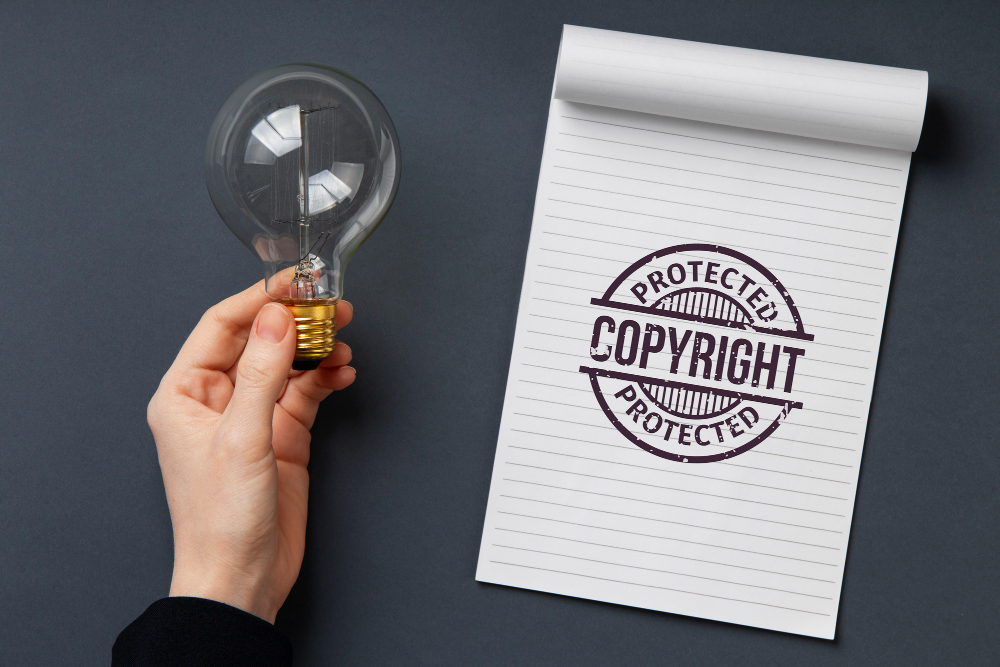
For artists, software developers in its emerging tech parks, authors, musicians, and entrepreneurs across India, your creative work is your most valuable asset. The question "how can I get something copyrighted" is the first step in transforming that creation from a vulnerable idea into legally protected intellectual property. Yet, the process often seems bureaucratic, complex, and distant.
At SolvLegal, we understand that legal protection should empower creativity, not hinder it. Built to demystify legal processes for founders and creators, we provide clear pathways to secure your rights.
Understanding Copyright: What It Is and What It Protects
Copyright is a legal right which provides the creator of original literary, dramatic, musical, and artistic works (and producers of cinematograph films and sound recordings) the exclusive right to use, reproduce, publish, perform, or adapt their work for a specific period.
What Can be Copyrighted?
- Literary Works: Books, articles, blogs (like this one), computer programs/software code, speeches, compilations.
- Musical Works: Musical compositions (notes, lyrics).
- Artistic Works: Paintings, sculptures, drawings, maps, photographs, architectural designs.
- Cinematograph Films: Movies, web series, documentaries.
- Sound Recordings: Audio recordings of music, podcasts, and lectures.
- Dramatic Works: Plays, screenplays, choreography.
What Cannot be Copyrighted?
- Ideas, procedures, methods of operation, or concepts.
- Titles, names, short phrases, or slogans (these may be trademarked).
- Works that are not fixed in a tangible form (e.g., an unrecorded speech).
- Facts or commonly known information.
Key Principle: Copyright protection is automatic from the moment your work is created and fixed in a tangible form. However, registration provides prima facie evidence of ownership in a court of law, which is crucial during disputes.
The Step-by-Step Process to Register a Copyright
Step 1: Ensure Your Work is Original and Complete
Copyright protects the expression of an idea, not the idea itself. Your work must be original and should be in its final or near-final form. You cannot register a mere concept or outline.
Step 2: Identify the Correct Class of Work
The Copyright Act has different categories. Filing under the correct class is vital:
- Class I: Literary, Dramatic, Musical, and Artistic Works (Form XIV)
- Class II: Cinematograph Films (Form XIII)
- Class III: Sound Recordings (Form XIII)
- Class IV: Computer Programs/Software (Filed under Literary Work in Class I)
Step 3: Prepare the Required Documents
Gather these documents for a smooth application:
- Application Form: Fully completed Form XIV (for most works) or Form XIII.
- Statement of Particulars & Statement of Further Particulars: Detailing the title, language, and description of the work.
- No Objection Certificate (NOC): From the author if the applicant is different (e.g., a publisher, a company). For software, an NOC from the developer/employee.
- Power of Attorney: If filing through a legal advisor or service like SolvLegal.
- Copies of the Work: Two hard copies or soft copies in the required format (e.g., a book manuscript, source code printouts, CD of sound recording).
- Proof of Identity & Address: PAN Card, Aadhaar Card, or Passport of the applicant.
- Fee Payment Proof: Demand draft or online payment receipt.
Step 4: Filing the Application
You can file online through the official Copyright Office portal (https://copyright.gov.in/) or offline by submitting physical documents to the Copyright Office in New Delhi. The process is centralized; there is no state-level office in Lucknow for submission, but professional services can manage this remotely for you.
Government Fees: Fees are modest and vary based on the work:
- Literary, Dramatic, Musical, or Artistic Work: ₹500 to ₹5,000 per work.
- Cinematograph Film: ₹5,000 to ₹10,000.
- Sound Recording: ₹2,000 to ₹5,000.
- (Fees are subject to change; always check the latest on the official portal.)
Step 5: The Waiting Period & Objection Handling
After submission, the Copyright Office examines the application. A mandatory 30-day public waiting period is observed, during which any person can file an objection against your claim. If no objections are filed and the examiner finds no discrepancies, the registration is processed.
Step 6: Receiving the Copyright Certificate
If the application is successful, the Copyright Office issues an official Certificate of Registration. This certificate is your strongest legal proof of ownership and the date of registration. The entire process can take 6 to 12 months, depending on complexities and objections.
The SolvLegal Advantage: Simplifying Copyright Protection
Navigating government portals, understanding legal classifications, and drafting precise descriptions can be daunting for creators focused on their craft. This is where SolvLegal transforms a complex procedure into a streamlined, stress-free experience.
1. Expert Guidance from Start to Finish
Our platform connects you with legal professionals who specialize in Intellectual Property. We help you:
- Classify Your Work Correctly: Ensuring your software, manuscript, or music is filed under the proper category.
- Draft Robust Descriptions & Particulars: Crafting the legal language that accurately and comprehensively defines your work's scope, minimizing future disputes.
- Prepare Bulletproof Documentation: Assembling the NOCs, Power of Attorney, and copies as per exact government specifications.
2. End-to-End Application Management
With SolvLegal, you don't have to navigate the portal alone or make trips to Delhi. We manage the entire process:
- Online Filing & Tracking: We handle the digital submission and provide you with real-time updates.
- Objection Response Management: If any objections arise during the 30-day window, our legal team drafts and files the necessary counter-statements to protect your claim.
- Liaison with the Copyright Office: We act as your representative, following up and ensuring smooth communication until you receive your certificate.
3. Beyond Copyright: Your Comprehensive IP Partner
Based in Lucknow, we understand the needs of Indian creators and businesses. Our support extends to:
- Copyright Licensing Agreements: Drafting contracts for assigning or licensing your copyrighted work to others.
- Trademark Registration: Protecting your brand names, logos, and slogans.
- IP Portfolio Strategy: Advising startups on how to bundle and manage their copyrights, trademarks, and other IP assets for business growth and investment.
Special Considerations for Common Work Types
For Software & Tech Startups
- What to file: The source code and object code are protected as a 'literary work'. A printed copy of the code (first 25 and last 25 pages) is submitted.
- Crucial: Ensure all developer IP is assigned to the company via an Employment Agreement or IP Assignment Deed before filing.
For Authors & Publishers:
- The entire manuscript is protected. Registration is highly recommended before publishing or sharing with publishers/agents.
For Musicians & Sound Recordings:
- Note: The musical composition (notes, lyrics) and the sound recording (the actual audio file) are separate copyrights and can be registered separately, often by different owners (composer vs. record label).
For Artists & Photographers:
- Registering photographs, paintings, and digital art prevents unauthorized commercial use. Keep dated, original files as additional proof.
Common Pitfalls to Avoid in Copyright Registration
- Registering Too Late: Register before publicly disclosing or publishing your work widely. While not mandatory, it strengthens your position.
- Inadequate Description: A vague description can limit the scope of your protection. Be specific.
- Incorrect Applicant Name: If created during employment or as commissioned work, the legal owner (company/commissioner) must be the applicant, not the individual creator, unless there's an agreement stating otherwise.
- Ignoring the 30-Day Window: Stay alert during this period. If an objection is filed and you miss the response deadline, your application may be rejected.
- Assuming Copyright Covers Everything: Remember, it doesn't protect ideas, brand names, or functional inventions (which require patents).
Conclusion: Secure Your Legacy with Confidence (H2)
In today's digital age, your creative and intellectual output is your currency. Copyright registration is not just a legal formality; it is an investment in your legacy and a critical business asset. It deters infringement, provides leverage in commercial deals, and is essential for raising funds or enforcing your rights in court.
While this guide empowers you with the knowledge of the what and why, the how is best executed with precision and expert support. SolvLegal exists to bridge that gap, combining accessible technology with deep legal expertise to protect what you create.
Don't let complexity stall your creativity. Secure your work today. Visit SolvLegal to get expert-guided help for your copyright registration, or explore our library of IP Assignment Agreements and Licensing Deeds to commercialize your protected work. Call us at 91150 80999 to book your appointment today!
FAQs (H2)
What is the fee for copyright registration in India? (H3)
Government fees are relatively low, ranging from ₹500 to ₹10,000 depending on the type of work. For example, a literary or artistic work typically costs ₹500-₹2,000, while a cinematograph film is ₹5,000-₹10,000. Professional service fees for guidance and filing are separate.
Can I copyright my website or mobile app? (H3)
Yes. The original content on your website (text, images, graphics) can be copyrighted as literary and artistic works. The unique source code of your website or mobile app is protected as a 'computer program' under literary works. The brand name/logo would require a separate trademark.
How long does copyright protection last in India?
For literary, dramatic, musical, and artistic works, copyright lasts for the lifetime of the author plus 60 years after their death. For cinematograph films, sound recordings, photographs, and works of government/companies, it is 60 years from the date of publication.
Is copyright registration mandatory for legal protection?
No, registration is not mandatory. Copyright exists automatically upon creation. However, registration is highly recommended as the certificate serves as conclusive proof of ownership in a court of law, which is crucial for filing infringement lawsuits and claiming damages.
Can a creator file for copyright locally, or do they need to go to Delhi?
The filing process is centralised through the Copyright Office in New Delhi. However, the entire process can be completed online via the official portal. There is no need to physically travel to Delhi. Using a professional service like SolvLegal can manage the entire online process and liaison remotely from Lucknow.

Related Articles
.jpeg "How to Protect an App Idea: Copyright, Design and Patent Explained")
Leave a Comment