Software Development Delays and Refund Claims in India: What the Law Actually Says
Read More
AI Development Agreements: Ownership of Models, Data and Outputs
By the SolvLegal Team
Published on: April 19, 2026, 11:42 a.m.
QUICK ANSWER
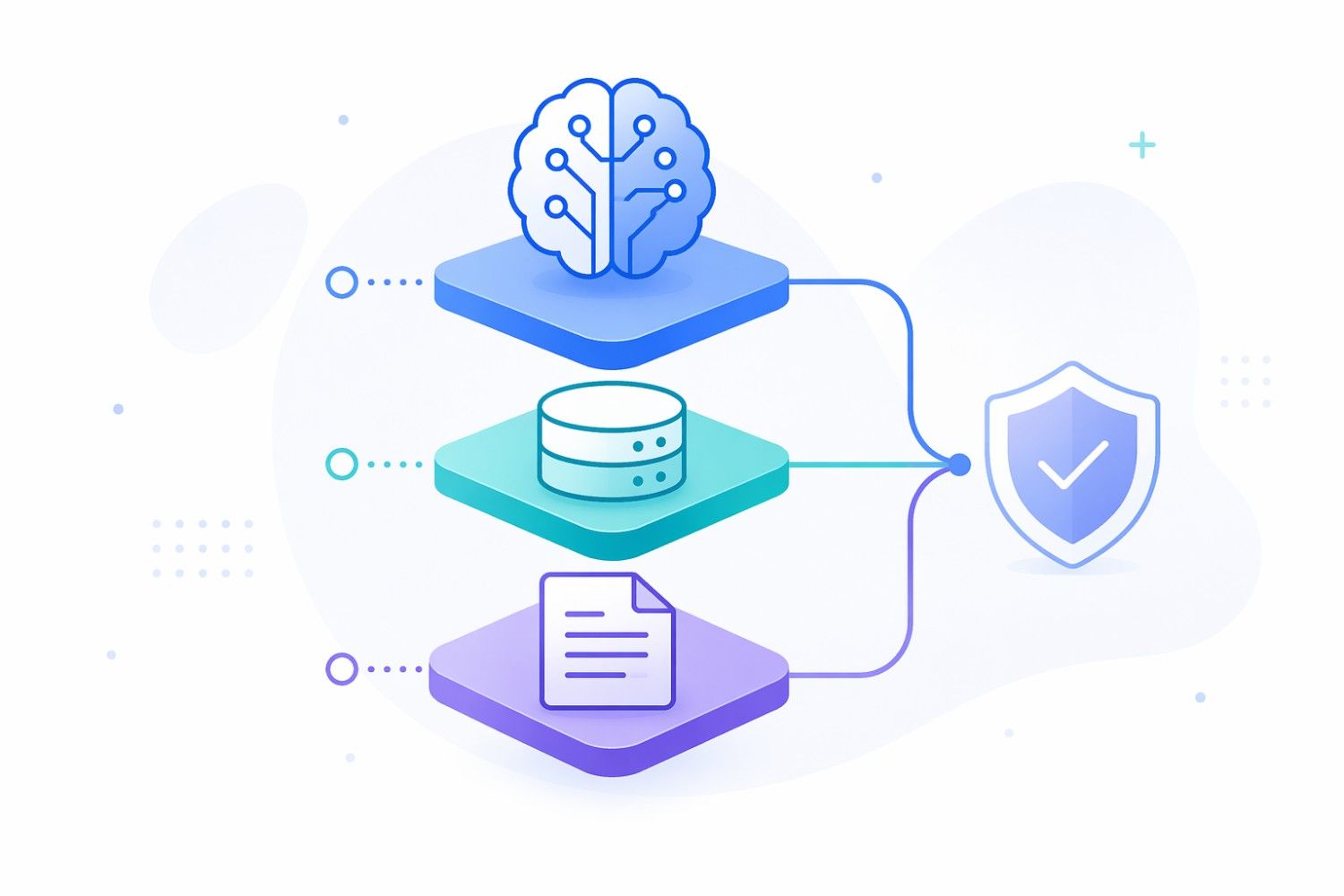
This blog explains how ownership works in AI development agreements, specifically focusing on three core elements: the AI model itself, the data used to train it, and the outputs it generates. These are the three layers where most legal confusion, and disputes, are currently arising.
Why this matters is simple. In many AI projects, businesses assume that if they pay for development, they automatically own the model and everything built from it. That is not always the case. In practice, ownership often depends on how the agreement is drafted, whether the model is built from scratch or fine-tuned from an existing system, and how data is handled during training.
At present, the law on AI ownership, especially for generated outputs, is still evolving across jurisdictions like the US, UK, EU, and India. Because of this uncertainty, contracts play a central role. A well-structured AI development agreement helps define who owns what, who can use what, and what risks each party is taking on.
If you are building, investing in, or using AI systems, understanding these ownership layers is essential. It directly affects your intellectual property rights, competitive advantage, and exposure to future disputes.
INTRODUCTION
When you work with AI, the most basic question quickly becomes unclear: what exactly do you own? You may pay a developer to build a model, use your company’s data to train it, or integrate an existing AI system into your product. At first glance, it feels straightforward. But in practice, ownership depends on how the system is built and how the agreement is structured.
The confusion usually arises at three levels. Do you own the AI model or only get a limited right to use it? Can your data be reused to train other systems? Do you actually own the outputs generated by the AI? These are not abstract concerns. Businesses are already dealing with them in contracts, and the answers are rarely obvious.
The problem is that existing intellectual property laws do not clearly address AI systems. Copyright law in the United States generally requires human authorship, and courts have refused protection for purely AI-generated works. The UK and EU follow a cautious approach, and in India, the law remains largely silent on AI-generated outputs. This means that statutory law alone does not give clear answers on ownership.
Because of this, contracts play a central role. An AI development agreement defines rights across three separate layers: the model, the data used to train it, and the outputs it produces. Each of these carries different risks, and if they are not clearly addressed, your ability to use or control the system may be limited.
So instead of asking who owns the AI, the better approach is to break it down. You need clarity on ownership of the model, control over data, and rights in outputs. The agreement is what turns that clarity into something enforceable.
WHO OWNS THE AI MODEL IN DEVELOPMENT AGREEMENTS?
When businesses enter into AI development agreements, they often assume a simple rule: if we pay for the model, we own it. In practice, ownership of AI models depends less on payment and more on how the system is built and what existing technologies are used.
The first distinction that matters is between custom-built models and pre-trained or foundation models. If a developer builds a model entirely from scratch using your specifications and proprietary data, you may negotiate full ownership under contract law principles. However, most modern AI systems rely on pre-existing architectures, open-source components, or proprietary foundation models. In such cases, the developer cannot legally transfer full ownership because parts of the system are already subject to third-party intellectual property rights.
This leads to a shift from ownership to licensing structures. In many AI agreements, what the client receives is a licence to use the model rather than ownership of the model itself. The scope of this licence becomes critical. It may define whether you can modify the model, commercialise it, sublicense it, or restrict others from using similar versions. A poorly defined licence can leave you with access to the system but limited control over its use.
A more complex situation arises with fine-tuned models, which are now common in AI development. Here, a base model, often owned by a third party or the developer, is further trained using your data. Legally, this creates a layered ownership structure. The underlying model remains with the original owner, while your contribution lies in the tuning process and resulting performance improvements. Courts generally recognise intellectual property only in original contributions, which makes full ownership claims over such combined systems difficult unless explicitly structured in the agreement.
This layered approach is also reflected in industry practice. Leading AI providers retain ownership of their base models while granting users limited rights over customisations. Even in enterprise contracts, developers often reserve rights to reuse underlying architectures, tools, and non-client-specific improvements.
From a legal drafting perspective, the real issue is not whether you “own the AI model” in absolute terms, but how rights are divided across different components. The agreement should clearly define whether you receive ownership or a licence, what parts of the system are included, and whether the developer retains reuse rights. Without this clarity, businesses may assume ownership but later find that their control is narrower than expected.
WHO OWNS THE TRAINING DATA AND INPUT DATA?
In AI development, data is often more valuable than the model itself. Naturally, businesses assume that if they provide the data, they retain full ownership and control over it. While this is generally recognised at a basic level, the legal and contractual position is more nuanced.
Most agreements acknowledge that the client retains ownership of its input data. This aligns with general principles of contract law and confidentiality. However, the more important question is not ownership of the raw data, but how that data is used during and after the training process.
When data is used to train an AI model, it does not remain in its original form. Instead, it influences the internal structure of the model through weights, patterns, and optimisation processes. Once this happens, it becomes practically difficult to separate the data from the model. This creates a situation where, although you may still “own” the original dataset, the value derived from it may no longer be exclusive to you.
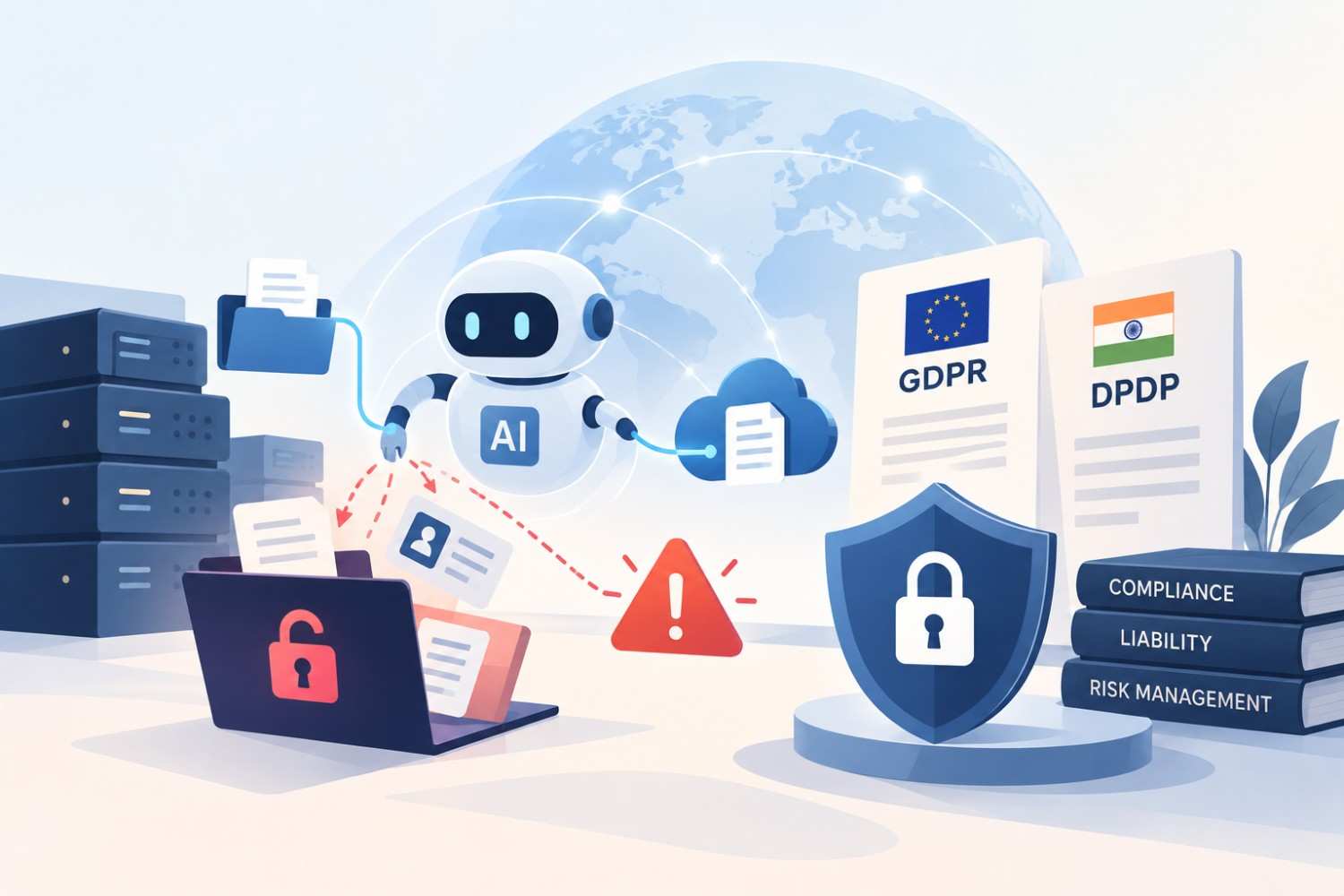
From a legal standpoint, Indian law does not clearly define ownership of data as a standalone right. Protection typically arises through contractual obligations, trade secret principles, and confidentiality clauses. Where personal data is involved, the Digital Personal Data Protection Act, 2023 becomes relevant. This law focuses on lawful processing, consent, and purpose limitation, rather than ownership in the strict sense. In cross-border contexts, the General Data Protection Regulation in the European Union imposes stricter requirements, including restrictions on data processing, transfer, and reuse.
The key risk emerges when agreements allow developers to use client data beyond the immediate project. Some contracts permit the use of data for improving general models, often in anonymised or aggregated form. While this may appear harmless, it can dilute the competitive advantage that the data provides. Over time, your proprietary data may contribute to systems that benefit other users or clients.
Another issue relates to data retention and control after project completion. If the agreement does not clearly require deletion or restrict continued use, the developer may retain access to the data or its derivatives. This becomes particularly sensitive where the data includes confidential business information, user behaviour patterns, or proprietary datasets because statutory law offers limited clarity, the allocation of rights over training data is largely driven by contract. The agreement must clearly define whether the data is used only for your project, whether any secondary use is permitted, and how long the developer can retain access. Without this clarity, businesses may technically retain ownership of their data, but lose control over how its value is used and shared in practice.
WHO OWNS AI-GENERATED OUTPUTS?
Ownership of AI-generated outputs is one of the most uncertain areas in current law. Businesses often assume that whatever the AI produces belongs to them. In reality, ownership depends on a mix of copyright law, platform terms, and contractual drafting.
Under the U.S. Copyright Act, 1976, copyright protection requires human authorship. Courts and the U.S. Copyright Office have consistently held that works generated without meaningful human input are not protected. This position was clearly affirmed in Thaler v. Perlmutter (2023)[1], where the court refused copyright protection for a work created entirely by an AI system. The practical implication is important. If an AI output does not qualify for copyright, it may fall into the public domain, meaning others can use similar content without infringement.
The United Kingdom takes a slightly different approach under Section 9(3) of the Copyright, Designs and Patents Act, 1988, which recognises authorship in computer-generated works and assigns it to the person who makes the necessary arrangements. However, this provision was drafted before modern generative AI and its application remains uncertain. The European Union also continues to emphasise human originality as a requirement for protection, and does not clearly recognise fully AI-generated works unless there is sufficient human creative contribution.
In India, the Copyright Act, 1957 does not explicitly deal with AI-generated outputs. Section 2(d) defines authorship in certain contexts, but it does not clearly extend to autonomous AI systems. While there have been administrative developments, there is no settled judicial position yet. This leaves businesses operating in a grey area where ownership of outputs cannot be assumed purely on the basis of statutory law.
Because of this uncertainty, platform terms and contracts play a central role. Major AI providers such as OpenAI, Microsoft, and Google generally allow users to use outputs generated through their systems. However, these rights are usually non-exclusive. This means that the same or similar outputs may be generated for other users, and exclusivity is not guaranteed. In addition, these platforms often include limitations on liability and conditional indemnities, especially where users comply with usage policies.
From a contractual perspective, simply stating that “outputs belong to the client” may not fully solve the problem. The real issue is whether those outputs are legally protectable and whether they are exclusive in practice. If the same output can be generated for multiple users, your ability to claim uniqueness or enforce rights becomes limited.
So, ownership of AI-generated outputs cannot be treated as a straightforward transfer of rights. It sits at the intersection of evolving copyright law, platform-specific terms, and contractual clarity. Without carefully addressing all three, businesses may believe they own the output, but find that their control is weaker than expected when they try to use or enforce it.
KEY CLAUSES EVERY AI DEVELOPMENT AGREEMENT MUST INCLUDE
Once you understand how ownership works across models, data, and outputs, the next step is to reflect that clarity in the agreement itself. In AI transactions, protection does not come from general legal principles alone. It comes from how precisely the contract defines rights, restrictions, and risk allocation.
IP Ownership Clause (Model, Customisation, Outputs)
This is the core clause of the agreement. It must clearly define what is being transferred and what is being retained. In many AI arrangements, developers retain ownership of the base model or underlying architecture, while granting the client a licence to use the customised version.
If the intention is to transfer ownership, the clause must be drafted as a proper assignment. Under Section 19 of the Copyright Act, 1957, assignment of copyright must be explicit in terms of scope, duration, and territory. A vague statement that “the client owns the AI system” may not be sufficient in law.
The clause should also separately address ownership of fine-tuned models and outputs, as these are often treated differently in practice.
Data Usage and Training Restrictions
This clause governs how input data is used during and after the project. While most agreements confirm that the client retains ownership of its data, the critical issue is whether the developer can reuse that data beyond the specific engagement.
The clause should clearly state whether data can be used to train other models, whether anonymisation permits reuse, and whether the developer can retain any derived insights. Where personal data is involved, compliance with the Digital Personal Data Protection Act, 2023 becomes relevant, especially regarding purpose limitation and lawful processing.
Without clear restrictions, data provided for one project may indirectly benefit other systems.
Indemnity for IP Infringement
AI systems carry a growing risk of intellectual property disputes, particularly where training data may include copyrighted material. This clause allocates responsibility if the model or its outputs infringe third-party rights.
Developers may agree to provide indemnity, but it is often limited. For example, it may apply only if the system is used as intended and not modified. Some agreements also cap liability or exclude indirect damages.
Given ongoing global litigation around AI training data, this clause requires careful attention to both scope and limitations.
Confidentiality and Data Security
Since AI development often involves sensitive business data, confidentiality obligations are essential. This clause should cover how data is accessed, stored, and protected, and should restrict unauthorised disclosure.
It should also require implementation of reasonable security practices. In cross-border contexts, additional compliance obligations may arise under frameworks such as GDPR, particularly where personal data is processed.
The strength of this clause directly affects how well your proprietary information is protected.
Model Improvements and Future Use Rights
AI systems evolve continuously. During development, improvements may be made to performance, accuracy, or architecture. This clause determines who owns those improvements and whether they can be reused.
In many agreements, developers retain the right to use general improvements or non-client-specific learnings in other projects. If this is not clearly addressed, enhancements derived from your use case may benefit others.
The clause should therefore define whether improvements remain exclusive or can be reused, and to what extent.
HIDDEN RISKS MOST BUSINESSES MISS IN AI AGREEMENTS
Even well-drafted AI agreements can leave gaps if certain risks are not explicitly addressed. These risks usually do not appear at the time of signing but become visible as the system is used, scaled, or commercialised.
- Model Reuse by Developer: Developers often retain the right to reuse underlying architectures, tools, or learnings. If not clearly restricted, elements derived from your project may be used in other client engagements, reducing your competitive advantage.
- Non-Exclusive AI Outputs: Most generative AI systems do not guarantee unique outputs. Even if the agreement assigns outputs to you, similar or identical outputs may be generated for others, limiting exclusivity and enforceability.
- Third-Party Training Data Liability: Many AI models are trained on large datasets that may include copyrighted material. Ongoing global litigation shows that infringement risks are real. If indemnity is limited or conditional, your business may bear part of this risk.
- Dependence on Third-Party AI Platforms: Custom solutions often rely on APIs or foundation models from providers like OpenAI, Google, or Microsoft. Changes in their terms, pricing, or access policies can directly affect your product and operations.
- Unclear Ownership of Improvements: AI systems evolve over time. If the agreement does not define ownership of improvements or derivatives, the developer may continue to benefit from enhancements driven by your data and usage.
- Data Leakage Through Training Use: If data usage is not tightly restricted, your proprietary data may be used to improve broader models, even in anonymised form, indirectly benefiting other users.
- Weak Exit or Transition Rights: If the agreement does not address transition support or data/model portability, moving away from the developer or platform can become difficult and costly.
These risks are often not obvious at the beginning, but they can significantly affect control, exclusivity, and long-term value.
WHEN YOU SHOULD DEFINITELY CONSULT A PROFESSIONAL
AI development agreements often look manageable at a surface level. Many clauses appear familiar if you have worked with software or IT contracts before. However, AI introduces layered ownership and evolving legal risks that are not always obvious from a standard review. In certain situations, relying only on general understanding can leave important gaps.
You should consider professional guidance when the AI system is part of your core product or business model. In such cases, ownership of the model, control over data, and rights in outputs directly affect your competitive advantage. Any ambiguity here can limit your ability to scale or commercialise the system.
It also becomes important where your project involves proprietary or sensitive data. This includes customer data, behavioural data, financial information, or any dataset that gives your business an edge. The way this data is used during training, retained after the project, or reused in other contexts needs to be carefully structured. Where personal data is involved, compliance with the Digital Personal Data Protection Act, 2023 and, in cross-border scenarios, frameworks like GDPR, adds another layer of responsibility.
Another situation that requires closer attention is when the development involves third-party models or APIs. Many AI solutions today are built on top of foundation models provided by global platforms. This creates a dependency that may not be fully visible in the primary agreement. Changes in platform terms, licensing restrictions, or usage policies can directly affect your rights and operations.
You should also be cautious in cases involving multiple stakeholders, such as joint development arrangements, investor-backed projects, or collaborations between companies. In such setups, aligning ownership, control, and exit rights becomes more complex, and unclear drafting can lead to conflicts later.
Finally, if the agreement includes indemnity clauses, IP transfers, or exclusivity arrangements, the exact wording matters significantly. These clauses often contain limitations, conditions, or carve-outs that may not be immediately obvious but can affect how risk is ultimately allocated.
The underlying point is simple. AI agreements combine elements of intellectual property, data regulation, and commercial structuring. Where the stakes involve long-term control, legal exposure, or significant value, a more careful and structured review is usually worth it.
WHAT SHOULD THE READER DO NEXT?
At this stage, the focus should shift from understanding concepts to assessing your own situation. AI agreements are not one-size-fits-all. The level of protection you need depends on how you are using AI and how critical it is to your business.
If you are using third-party AI tools or APIs, the first step is to review the platform terms carefully. Many businesses rely on these tools without checking how outputs are licensed, whether data is reused for training, or what liability limitations apply. Even basic clarity here can prevent later surprises.
If you are building a custom AI solution, it becomes important to define ownership and usage rights before development begins. This includes clarity on the model, training data, and outputs. Once the system is built, renegotiating these aspects becomes significantly harder.
If your project involves proprietary data or plays a central role in your product, you should take a more structured approach. In such cases, even small gaps in drafting can affect long-term control, scalability, or exclusivity.
A practical way to think about it is to ask yourself whether you have clear answers to a few key points. Do you know who owns the model? Do you control how your data is used? Do you have usable rights over the outputs? If any of these feel uncertain, the agreement likely needs closer attention.
The goal is not to make the contract overly complex, but to ensure that the important aspects are not left unclear. Early clarity usually costs less than fixing issues later.
CONCLUSION
AI systems are not a single asset. They are a combination of models, data, and outputs, each governed by different legal principles and practical constraints. This is why ownership in AI cannot be understood in simple terms. It needs to be examined layer by layer.
Across jurisdictions, the law is still evolving. Copyright frameworks in the United States, United Kingdom, European Union, and India do not fully resolve questions around AI-generated outputs or model ownership. In this environment, contracts take on a central role. They do not just support the transaction; they define how control, usage, and risk are allocated over time.
For businesses, the real risk is not always visible at the time of signing. It appears later, when the system scales, when data is reused, or when outputs are commercialised. At that stage, what matters is not what was assumed, but what was clearly agreed.
A well-structured AI development agreement does not try to eliminate uncertainty in the law. Instead, it manages that uncertainty by clearly defining ownership, restricting unintended use, and aligning expectations between parties. It allows the technology to evolve while ensuring that your position remains protected.
In the end, working with AI is not just about building capability. It is about maintaining control over the assets that create that capability.
FAQs
1. Who owns AI-generated content legally?
In most jurisdictions, ownership of AI-generated content is still unclear. In the United States, copyright law generally requires human authorship, so purely AI-generated works may not be protected. In the UK, Section 9(3) of the Copyright, Designs and Patents Act, 1988 attributes authorship to the person making necessary arrangements, but its application to modern AI is uncertain. In India, the Copyright Act, 1957 does not clearly address this issue. Because of this, ownership is often defined through contracts rather than relying only on statutory law.
2. Do I own a custom AI model if I pay for it?
Not automatically. Ownership depends on how the model is built and what the agreement states. If the model is developed entirely from scratch, ownership may be transferred. However, if it relies on pre-trained or third-party models, you will usually receive a licence rather than full ownership. The contract must clearly define what rights you are getting.
3. Can developers reuse my data to train other AI models?
It depends on the agreement. Some contracts restrict data use strictly to your project, while others allow reuse in anonymised or aggregated form to improve general models. If reuse is not clearly restricted, your data may indirectly benefit other systems, even if you retain ownership of the original dataset.
4. What is a fine-tuned AI model and who owns it?
A fine-tuned model is created by taking an existing base model and training it further using specific data. Ownership in such cases is layered. The base model usually remains with the original owner, while you may get rights over the customised version. Full ownership of the entire system is rare unless specifically negotiated.
5. Can AI outputs be copyrighted in India?
The legal position is not settled. The Copyright Act, 1957 does not explicitly recognise AI-generated works. If there is sufficient human involvement, copyright may be claimed, but purely automated outputs may face challenges. In practice, businesses rely on contractual rights to control usage of outputs.
6. What is an AI indemnity clause?
An AI indemnity clause allocates responsibility if the AI system or its outputs infringe third-party rights, such as copyright. Developers may agree to indemnify the client, but this is often subject to conditions and limitations. The scope of indemnity should be reviewed carefully.
7. Are AI development agreements enforceable in India?
Yes, AI development agreements are enforceable under the Indian Contract Act, 1872, provided they meet standard requirements such as lawful consideration and consent. However, enforceability of specific rights, especially around IP and data, depends on how clearly they are drafted and whether they align with applicable laws.
Related articles:
1. Term Sheets & Shareholders’ Agreements 2025: Legal Clauses Indian Founders Often Overlook
2. Outsourcing Software Development Abroad? Legal Clauses Every Business Must Know (2025 Global Guide)
Disclaimer
The information provided in this article is for general educational purposes and does not constitute a legal advice. Readers are encouraged to seek professional counsel before acting on any information herein. SolvLegal and the author disclaim any liability arising from reliance on this content.
[1] 687 F. Supp. 3d 140 (D.D.C. 2023)

Related Articles
Leave a Comment